State Supreme Court
Featured
Tennessee Supreme Court
Apr 2026

Capital Punishment
Tony Von Carruthers v. State of Tennessee
Tennessee plans to execute Tony Carruthers on May 21 even though they refuse to run a simple fingerprint comparison and DNA testing that could prove what Tony has been arguing for 30 years - that he is innocent of this crime and that Tennessee convicted and sentenced the wrong man to death.
All Cases
82 State Supreme Court Cases

Ohio Supreme Court
Nov 2023
Voting Rights
State of Ohio v. Urbanek (Amicus)
Mr. Edward Urbanek’s conviction is inconsistent with federal voting rights. Specifically, the federal Help America Vote Act (HAVA) requires that states allow a voter to complete a provisional ballot when their registration status or eligibility cannot be verified immediately. Under the Ohio courts' interpretation, any voter who completes a provisional ballot and is ultimately found ineligible is “attempting” to vote unlawfully. That interpretation would defeat the purpose of HAVA and provisional ballots.
Explore case
Ohio Supreme Court
Nov 2023
Voting Rights
State of Ohio v. Urbanek (Amicus)
Mr. Edward Urbanek’s conviction is inconsistent with federal voting rights. Specifically, the federal Help America Vote Act (HAVA) requires that states allow a voter to complete a provisional ballot when their registration status or eligibility cannot be verified immediately. Under the Ohio courts' interpretation, any voter who completes a provisional ballot and is ultimately found ineligible is “attempting” to vote unlawfully. That interpretation would defeat the purpose of HAVA and provisional ballots.
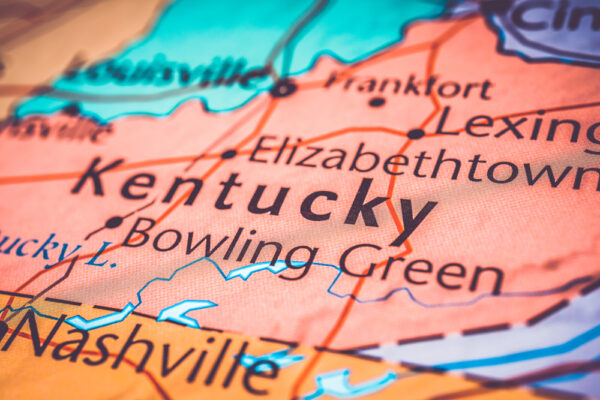
Kentucky Supreme Court
Nov 2023
Voting Rights
Commonwealth of Kentucky v. Graham (Amicus)
State legislatures are responsible for creating state legislative and U.S. congressional districts. In 2019, the U.S. Supreme Court held in Rucho v. Common Cause that federal courts have no authority to review claims that states have sorted voters along partisan lines to favor one political party over others. However, challenges to partisan gerrymandering continue in many state courts, and this case involves one such constitutional challenge in Kentucky.
Explore case
Kentucky Supreme Court
Nov 2023
Voting Rights
Commonwealth of Kentucky v. Graham (Amicus)
State legislatures are responsible for creating state legislative and U.S. congressional districts. In 2019, the U.S. Supreme Court held in Rucho v. Common Cause that federal courts have no authority to review claims that states have sorted voters along partisan lines to favor one political party over others. However, challenges to partisan gerrymandering continue in many state courts, and this case involves one such constitutional challenge in Kentucky.

New Jersey Supreme Court
Nov 2023
Women's Rights
Free Speech
Usachenok v. State of New Jersey
The New Jersey Department of Treasury maintains a policy that requires employers investigating workplace discrimination to “request” confidentiality from all witnesses with respect to any information related to the investigation. This case involves whether a confidentiality policy of this kind violates the free speech rights under the New Jersey Constitution of state employees who are witnesses, and whether those rights are broader than the U.S. Constitution’s First Amendment free speech right. The ACLU’s State Supreme Court Initiative and Women’s Rights Project, along with the ACLU of New Jersey, filed an amicus brief in the New Jersey Supreme Court, urging that court to revive a government employee’s speech claim challenging the confidentiality policy and to interpret the New Jersey Constitution’s speech protection more broadly than federal constitutional law. In April 2024, the New Jersey Supreme Court ruled in our favor and reversed the judgment of the Appellate Division.
Explore case
New Jersey Supreme Court
Nov 2023
Women's Rights
Free Speech
Usachenok v. State of New Jersey
The New Jersey Department of Treasury maintains a policy that requires employers investigating workplace discrimination to “request” confidentiality from all witnesses with respect to any information related to the investigation. This case involves whether a confidentiality policy of this kind violates the free speech rights under the New Jersey Constitution of state employees who are witnesses, and whether those rights are broader than the U.S. Constitution’s First Amendment free speech right. The ACLU’s State Supreme Court Initiative and Women’s Rights Project, along with the ACLU of New Jersey, filed an amicus brief in the New Jersey Supreme Court, urging that court to revive a government employee’s speech claim challenging the confidentiality policy and to interpret the New Jersey Constitution’s speech protection more broadly than federal constitutional law. In April 2024, the New Jersey Supreme Court ruled in our favor and reversed the judgment of the Appellate Division.
Nevada Supreme Court
Nov 2023
Criminal Law Reform
Smart Justice
Cannabis Equity & Inclusion Community v. Nevada Board of Pharmacy
Nevadans, like voters in many states, have chosen to legalize marijuana for medicinal and recreational use. In Nevada, these changes—adopted through citizen ballot initiatives and, in the case of medical marijuana, enshrined in the Nevada Constitution—were intended to ensure that marijuana is regulated much like alcohol and that law enforcement resources are focused on violent crime, not the prosecution of non-violent drug offenses. Despite these legal changes, Nevada’s Board of Pharmacy continues to regulate marijuana as a Schedule I controlled substance for purposes of state law, akin to the Board’s treatment of cocaine and fentanyl. The Board’s scheduling designation for marijuana has enormous implications for criminal defendants in Nevada since state law makes it a felony to possess or engage in certain other activity with respect to a Schedule I controlled substance, as designated by the Board.
This case, brought by an individual and organization harmed by the Board’s scheduling designation for marijuana, involves the question whether the designation violates the Nevada Constitution and state statutes. The ACLU of Nevada is counsel in the case, and the ACLU’s State Supreme Court Initiative is co-counsel on appeal.
In August 2024, the Court held that Pool and CEIC lack standing to challenge marijuana's designation as a Schedule I substance but recognized that other individuals could appropriately do so in the future. The Court did not reach the merits in reversing the district court’s positive decision.
Explore case
Nevada Supreme Court
Nov 2023
Criminal Law Reform
Smart Justice
Cannabis Equity & Inclusion Community v. Nevada Board of Pharmacy
Nevadans, like voters in many states, have chosen to legalize marijuana for medicinal and recreational use. In Nevada, these changes—adopted through citizen ballot initiatives and, in the case of medical marijuana, enshrined in the Nevada Constitution—were intended to ensure that marijuana is regulated much like alcohol and that law enforcement resources are focused on violent crime, not the prosecution of non-violent drug offenses. Despite these legal changes, Nevada’s Board of Pharmacy continues to regulate marijuana as a Schedule I controlled substance for purposes of state law, akin to the Board’s treatment of cocaine and fentanyl. The Board’s scheduling designation for marijuana has enormous implications for criminal defendants in Nevada since state law makes it a felony to possess or engage in certain other activity with respect to a Schedule I controlled substance, as designated by the Board.
This case, brought by an individual and organization harmed by the Board’s scheduling designation for marijuana, involves the question whether the designation violates the Nevada Constitution and state statutes. The ACLU of Nevada is counsel in the case, and the ACLU’s State Supreme Court Initiative is co-counsel on appeal.
In August 2024, the Court held that Pool and CEIC lack standing to challenge marijuana's designation as a Schedule I substance but recognized that other individuals could appropriately do so in the future. The Court did not reach the merits in reversing the district court’s positive decision.
Utah Supreme Court
Nov 2023
Prisoners' Rights
Natalie R. v. State of Utah
In recent years, federal courts have relied on what’s called the “political question doctrine” to refuse to review legal claims of wrongdoing, even those involving egregious constitutional harm. Using the political question doctrine, federal courts have turned away claims from people seeking justice on the theory that court review of those claims would embroil the courts in matters best left to the political process. Whether state courts should adopt a parallel political question doctrine—and thus limit access to justice for people whose civil rights and liberties have been violated—is an open question in many states. This case involves the scope of Utah courts’ authority to review important constitutional claims.
Explore case
Utah Supreme Court
Nov 2023
Prisoners' Rights
Natalie R. v. State of Utah
In recent years, federal courts have relied on what’s called the “political question doctrine” to refuse to review legal claims of wrongdoing, even those involving egregious constitutional harm. Using the political question doctrine, federal courts have turned away claims from people seeking justice on the theory that court review of those claims would embroil the courts in matters best left to the political process. Whether state courts should adopt a parallel political question doctrine—and thus limit access to justice for people whose civil rights and liberties have been violated—is an open question in many states. This case involves the scope of Utah courts’ authority to review important constitutional claims.