Fighting Cuts to Voting Access
League of Women Voters of Massachusetts v. Trump
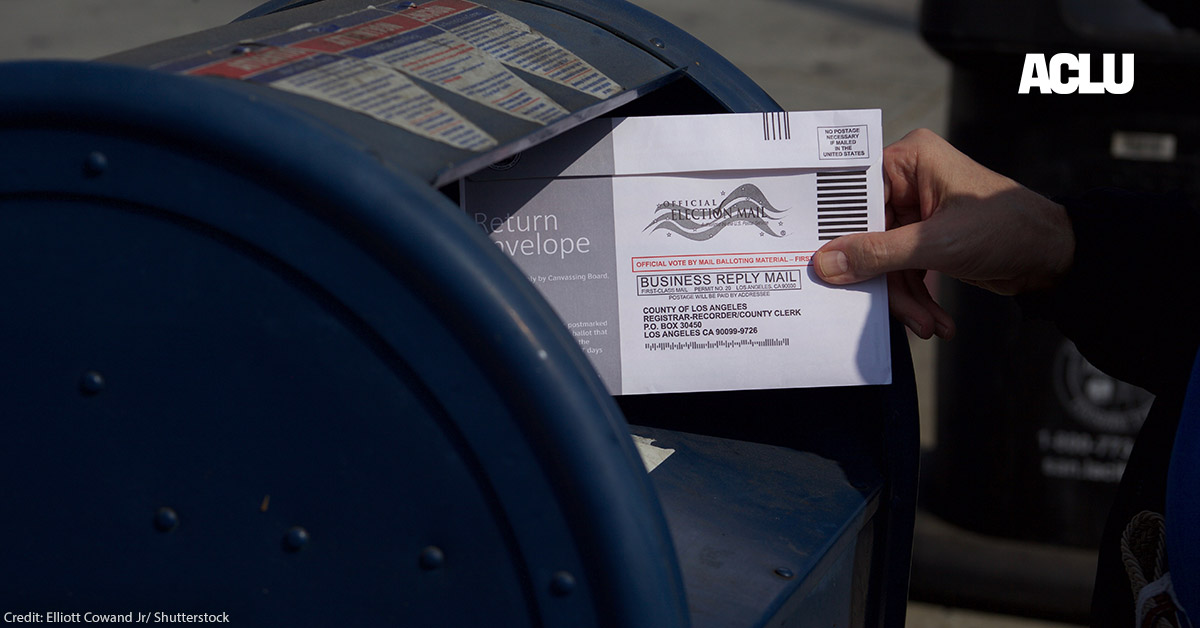
On March 31, 2026, President Trump issued a sweeping Executive Order titled "Ensuring Citizen Verification and Integrity in Federal Elections," seeking once again to seize control of election administration from Congress and the states. The Order directs federal agencies to compile lists of U.S. citizens and transmit them to states before every election, directs the U.S. Postal Service -- an independent agency established by Congress -- to create a list of "approved" mail voters, and instructs USPS to refuse to deliver ballots from voters not on that federally created list. If implemented, the Order would threaten the ability of millions of eligible citizens to cast their ballots, particularly military members, overseas citizens, the elderly, recently naturalized citizens, and voters with disabilities who rely on mail voting.
Status: Ongoing
View Case
Learn About Fighting Cuts to Voting Access
Featured
New Hampshire
Jul 2026
Fighting Cuts to Voting Access
Coalition for Open Democracy v. Scanlan
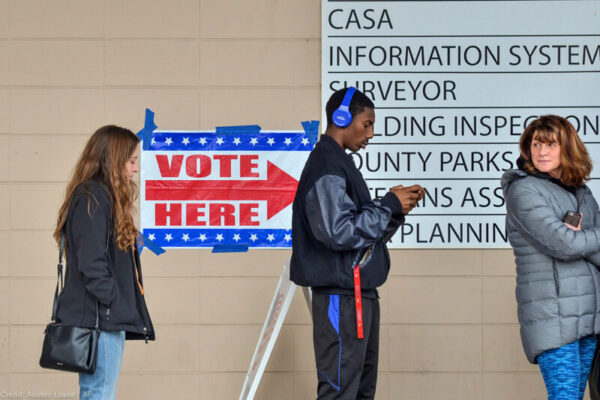
This lawsuit challenges HB 1569, a new law that will make New Hampshire the only state to require every person to produce documentary proof of citizenship when they register to vote for both state and federal elections. It also challenges HB 1569’s elimination a preexisting protection for voters—namely, an affidavit option that allowed voters who faced surprise challenges to their eligibility at the polls to swear to their qualifications and cast a ballot. Accordingly, HB 1569 violates the First and Fourteenth Amendments of the U.S. Constitution by placing substantial burdens on New Hampshirites at all stages of the voting process, and will arbitrarily disenfranchise hundreds, if not thousands of qualified voters.
Washington, D.C.
Oct 2025
Fighting Cuts to Voting Access
League of Women Voters Education Fund v. Trump
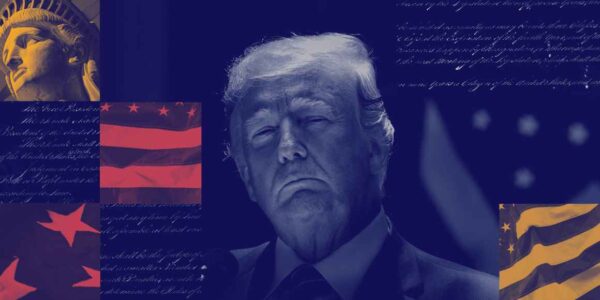
On March 25, 2025, in a sweeping and unprecedented Executive Order, President Trump attempted to usurp the power to regulate federal elections from Congress and the States. Among other things, the Executive Order directs the Election Assistance Commission—an agency that Congress specifically established to be bipartisan and independent—to require voters to show a passport or other citizenship documentation in order to register to vote in federal elections. If implemented, the Executive Order would threaten the ability of millions of eligible Americans to register and vote and upend the administration of federal elections.
On behalf of leading voter registration organizations and advocacy organizations, the ACLU and co-counsel filed a lawsuit to block the Executive Order as an unconstitutional power grab.
All Cases
54 Fighting Cuts to Voting Access Cases
California
Jul 2026
Fighting Cuts to Voting Access
Issa v. Weber
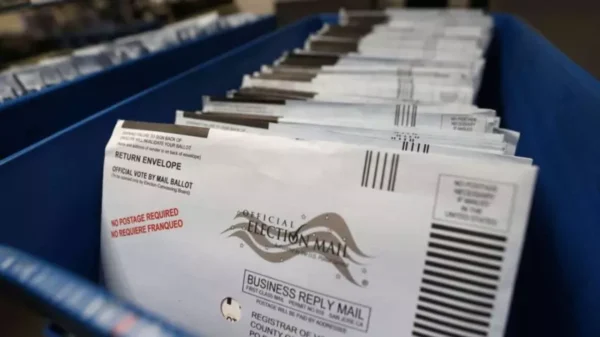
Congressman Darrell Issa sued to prevent California from counting mail ballots postmarked by election day and received within the following seven days, consistent with California law. If successful, literally hundreds of thousands of Californians will be disenfranchised at each election. The ACLU and its three California affiliates have sought to intervene in the case on behalf of the League of Women Voters of California to ensure that California voters are able to have their ballots counted consistent with state procedures.
Explore case
California
Jul 2026
Fighting Cuts to Voting Access
Issa v. Weber
Congressman Darrell Issa sued to prevent California from counting mail ballots postmarked by election day and received within the following seven days, consistent with California law. If successful, literally hundreds of thousands of Californians will be disenfranchised at each election. The ACLU and its three California affiliates have sought to intervene in the case on behalf of the League of Women Voters of California to ensure that California voters are able to have their ballots counted consistent with state procedures.
U.S. Supreme Court
Jun 2026
Fighting Cuts to Voting Access
Watson v. Republican National Committee (Amicus)
In 2020, in a nearly unanimous bipartisan vote, Mississippi joined eighteen other states in accepting mail ballots postmarked by Election Day that arrived after Election Day (in Mississippi’s case, up to five business days). This lawsuit by partisan actors seeks to disenfranchise these voters whose ballot is mailed by Election Day but—through no fault of their own—does not arrive until afterwards. In Mississippi, this harm will fall disproportionately on voters with disabilities, older voters, and other communities that rely upon absentee voting. Twisting the words and meaning of Congress, the RNC argues that three longstanding federal laws that set a uniform election day for federal races require that ballot may only be counted if they are received by election officials by Election Day. If accepted, this radical argument would not only disenfranchise thousands upon thousands of voters in Mississippi and thirty other states, but also upend election administration in every state.
Explore case
U.S. Supreme Court
Jun 2026
Fighting Cuts to Voting Access
Watson v. Republican National Committee (Amicus)
In 2020, in a nearly unanimous bipartisan vote, Mississippi joined eighteen other states in accepting mail ballots postmarked by Election Day that arrived after Election Day (in Mississippi’s case, up to five business days). This lawsuit by partisan actors seeks to disenfranchise these voters whose ballot is mailed by Election Day but—through no fault of their own—does not arrive until afterwards. In Mississippi, this harm will fall disproportionately on voters with disabilities, older voters, and other communities that rely upon absentee voting. Twisting the words and meaning of Congress, the RNC argues that three longstanding federal laws that set a uniform election day for federal races require that ballot may only be counted if they are received by election officials by Election Day. If accepted, this radical argument would not only disenfranchise thousands upon thousands of voters in Mississippi and thirty other states, but also upend election administration in every state.
Pennsylvania
Jun 2026
Fighting Cuts to Voting Access
United States v. Pennsylvania
The Department of Justice (DOJ) sued the State of Pennsylvania, seeking private, confidential voter data that is protected by state privacy laws. DOJ’s efforts appear to be part of an effort to build a national voter database without congressional authorization and to improperly question the validity of state voter rolls.
Explore case
Pennsylvania
Jun 2026
Fighting Cuts to Voting Access
United States v. Pennsylvania
The Department of Justice (DOJ) sued the State of Pennsylvania, seeking private, confidential voter data that is protected by state privacy laws. DOJ’s efforts appear to be part of an effort to build a national voter database without congressional authorization and to improperly question the validity of state voter rolls.
South Carolina
May 2026
Fighting Cuts to Voting Access
NAACP South Carolina State Conference v. Wilson
All voters with disabilities have the right to receive assistance voting from a person of their choice. South Carolina prohibits some voters with disabilities from receiving assistance and limits who voters can rely on for assistance. Voters with disabilities and the NAACP South Carolina State Conference sued to challenge those laws under Section 208 of the Voting Rights Act and protect disabled voters’ right to assistance.
Explore case
South Carolina
May 2026
Fighting Cuts to Voting Access
NAACP South Carolina State Conference v. Wilson
All voters with disabilities have the right to receive assistance voting from a person of their choice. South Carolina prohibits some voters with disabilities from receiving assistance and limits who voters can rely on for assistance. Voters with disabilities and the NAACP South Carolina State Conference sued to challenge those laws under Section 208 of the Voting Rights Act and protect disabled voters’ right to assistance.
Montana
May 2026
Fighting Cuts to Voting Access
Montana Federation of Public Employees v. Montana
Representing Western Native Voice and four sovereign tribal nations in Montana, the American Civil Liberties Union, ACLU of Montana, and Native American Rights Fund (NARF) challenged the latest in a line of Montana laws that hinder Native American participation in the state’s electoral process — SB 490, which drastically limits access to Election Day voter registration (EDR) in Montana. These laws violate a number of provisions in the Montana Constitution: the right to vote, equal protection, and due process.
Explore case
Montana
May 2026
Fighting Cuts to Voting Access
Montana Federation of Public Employees v. Montana
Representing Western Native Voice and four sovereign tribal nations in Montana, the American Civil Liberties Union, ACLU of Montana, and Native American Rights Fund (NARF) challenged the latest in a line of Montana laws that hinder Native American participation in the state’s electoral process — SB 490, which drastically limits access to Election Day voter registration (EDR) in Montana. These laws violate a number of provisions in the Montana Constitution: the right to vote, equal protection, and due process.