Fighting Cuts to Voting Access
League of Women Voters of Massachusetts v. Trump
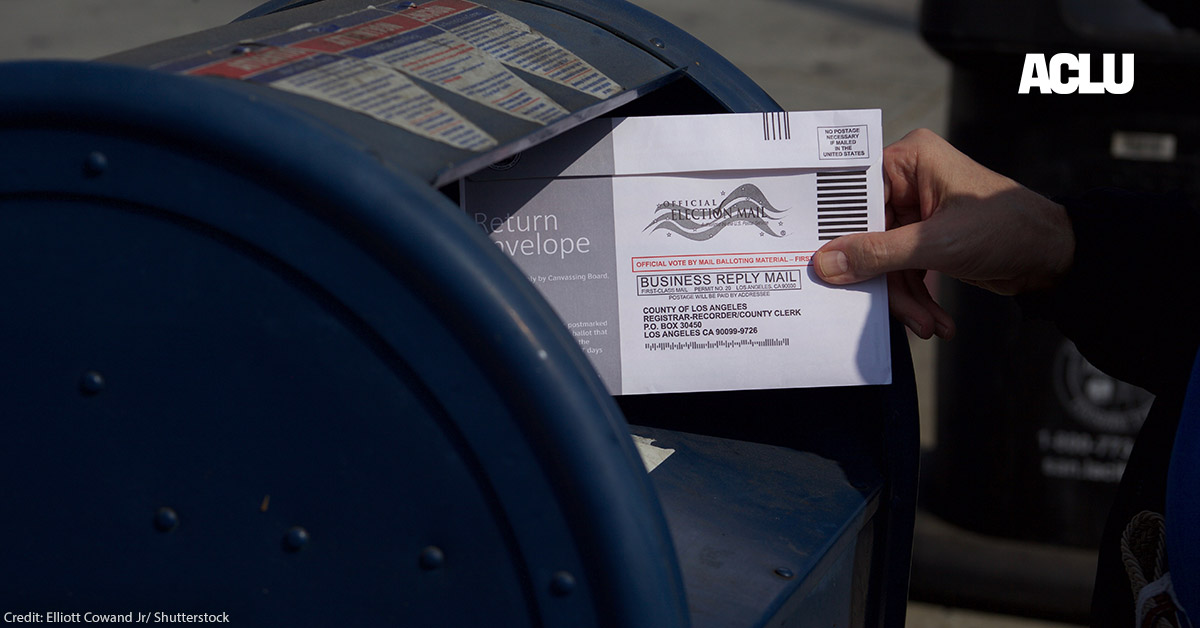
On March 31, 2026, President Trump issued a sweeping Executive Order titled "Ensuring Citizen Verification and Integrity in Federal Elections," seeking once again to seize control of election administration from Congress and the states. The Order directs federal agencies to compile lists of U.S. citizens and transmit them to states before every election, directs the U.S. Postal Service -- an independent agency established by Congress -- to create a list of "approved" mail voters, and instructs USPS to refuse to deliver ballots from voters not on that federally created list. If implemented, the Order would threaten the ability of millions of eligible citizens to cast their ballots, particularly military members, overseas citizens, the elderly, recently naturalized citizens, and voters with disabilities who rely on mail voting.
Status: Ongoing
View Case
Learn About Fighting Cuts to Voting Access
Featured
New Hampshire
Jul 2026
Fighting Cuts to Voting Access
Coalition for Open Democracy v. Scanlan
This lawsuit challenges HB 1569, a new law that will make New Hampshire the only state to require every person to produce documentary proof of citizenship when they register to vote for both state and federal elections. It also challenges HB 1569’s elimination a preexisting protection for voters—namely, an affidavit option that allowed voters who faced surprise challenges to their eligibility at the polls to swear to their qualifications and cast a ballot. Accordingly, HB 1569 violates the First and Fourteenth Amendments of the U.S. Constitution by placing substantial burdens on New Hampshirites at all stages of the voting process, and will arbitrarily disenfranchise hundreds, if not thousands of qualified voters.
Washington, D.C.
Oct 2025
Fighting Cuts to Voting Access
League of Women Voters Education Fund v. Trump
On March 25, 2025, in a sweeping and unprecedented Executive Order, President Trump attempted to usurp the power to regulate federal elections from Congress and the States. Among other things, the Executive Order directs the Election Assistance Commission—an agency that Congress specifically established to be bipartisan and independent—to require voters to show a passport or other citizenship documentation in order to register to vote in federal elections. If implemented, the Executive Order would threaten the ability of millions of eligible Americans to register and vote and upend the administration of federal elections.
On behalf of leading voter registration organizations and advocacy organizations, the ACLU and co-counsel filed a lawsuit to block the Executive Order as an unconstitutional power grab.
All Cases
54 Fighting Cuts to Voting Access Cases
Pennsylvania
Aug 2025
Fighting Cuts to Voting Access
Eakin v. Adams County Board of Elections (Amicus)
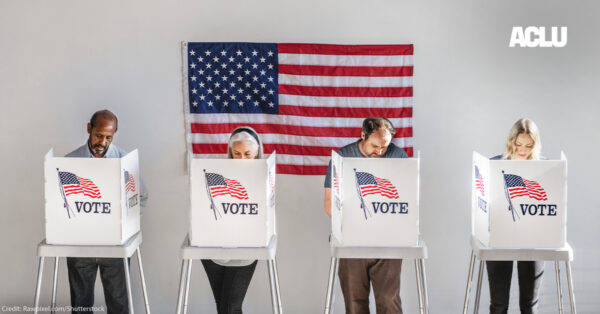
In November 2022, thousands of Pennsylvania voters were denied the right to vote based on a meaningless paperwork error. They filled out their mail ballots, signed the form on the outer return envelope, and returned their ballots on time. Yet their ballots were not counted, because they either forgot to write the date on their return envelope, or they accidentally wrote the wrong date. We're fighting to make sure that every vote counts
Explore case
Pennsylvania
Aug 2025
Fighting Cuts to Voting Access
Eakin v. Adams County Board of Elections (Amicus)
In November 2022, thousands of Pennsylvania voters were denied the right to vote based on a meaningless paperwork error. They filled out their mail ballots, signed the form on the outer return envelope, and returned their ballots on time. Yet their ballots were not counted, because they either forgot to write the date on their return envelope, or they accidentally wrote the wrong date. We're fighting to make sure that every vote counts
Washington, D.C.
Aug 2025
Fighting Cuts to Voting Access
Bower v. Social Security Administration
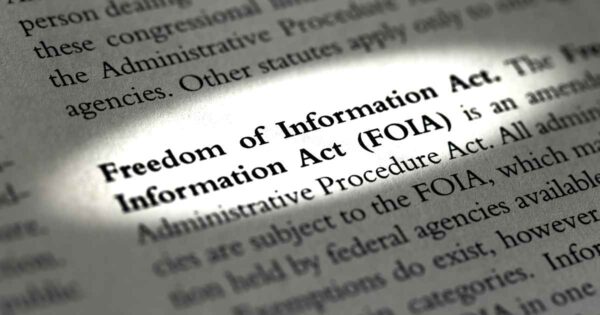
Representing itself and two journalists from Lawfare, the American Civil Liberties Union brought a lawsuit to enforce Freedom of Information Act (FOIA) requests made to the Social Security Administration and U.S. Citizenship and Immigration Services regarding changes made to the SAVE program, which has been touted as being used by states in order to remove voters from the registration rolls. While the government made public statements about the SAVE program being updated, the details of those changes, such as the particular programs and databases that have been altered, the ways they have been altered, and the nature and extent of any use and sharing of individuals’ personal information by the federal agencies entrusted with that information, have all been kept secret.
Explore case
Washington, D.C.
Aug 2025
Fighting Cuts to Voting Access
Bower v. Social Security Administration
Representing itself and two journalists from Lawfare, the American Civil Liberties Union brought a lawsuit to enforce Freedom of Information Act (FOIA) requests made to the Social Security Administration and U.S. Citizenship and Immigration Services regarding changes made to the SAVE program, which has been touted as being used by states in order to remove voters from the registration rolls. While the government made public statements about the SAVE program being updated, the details of those changes, such as the particular programs and databases that have been altered, the ways they have been altered, and the nature and extent of any use and sharing of individuals’ personal information by the federal agencies entrusted with that information, have all been kept secret.
U.S. Supreme Court
Jun 2025
Fighting Cuts to Voting Access
O'Bannon v. King
Virginia permanently disenfranchises all people with felony convictions unless the governor restores their rights. This lawsuit—brought by the ACLU of Virginia and co-counsel partners—argues that the policy violates the Readmissions Act of 1870, which bars Virginia from denying the vote based on convictions that didn’t exist at common law in 1870. The state tried to dismiss the case by invoking sovereign immunity, but the courts rejected that argument. Now, the case moves forward with the potential to restore voting rights to thousands of Virginians.
Explore case
U.S. Supreme Court
Jun 2025
Fighting Cuts to Voting Access
O'Bannon v. King
Virginia permanently disenfranchises all people with felony convictions unless the governor restores their rights. This lawsuit—brought by the ACLU of Virginia and co-counsel partners—argues that the policy violates the Readmissions Act of 1870, which bars Virginia from denying the vote based on convictions that didn’t exist at common law in 1870. The state tried to dismiss the case by invoking sovereign immunity, but the courts rejected that argument. Now, the case moves forward with the potential to restore voting rights to thousands of Virginians.
Georgia Supreme Court
Jun 2025
Fighting Cuts to Voting Access
Eternal Vigilance Action, Inc. v. Georgia
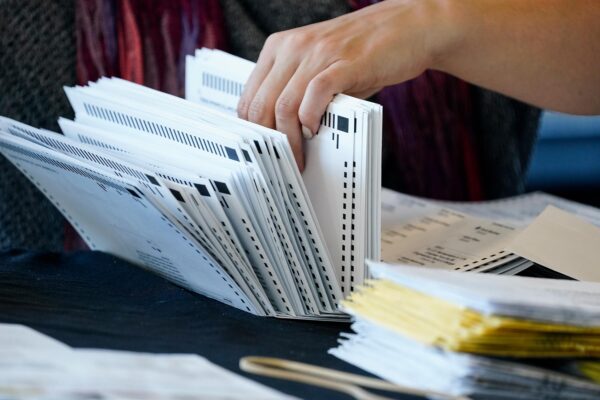
The ACLU and partner organizations intervened in this case to represent the rights of voters and voting-rights organizations in a case challenging a number of rules passed by the Georgia State Election Board. We challenged the rule requiring that the number of votes cast be hand counted at the polling place prior to the tabulation of votes. In a critical victory for Georgia voters, in June 2025, the Georgia Supreme Court upheld a lower court’s decision permanently blocking the rule requiring hand counting of ballots at polling places before tabulation — a process widely criticized for risking delays, ballot spoliation, and voter disenfranchisement.
Explore case
Georgia Supreme Court
Jun 2025
Fighting Cuts to Voting Access
Eternal Vigilance Action, Inc. v. Georgia
The ACLU and partner organizations intervened in this case to represent the rights of voters and voting-rights organizations in a case challenging a number of rules passed by the Georgia State Election Board. We challenged the rule requiring that the number of votes cast be hand counted at the polling place prior to the tabulation of votes. In a critical victory for Georgia voters, in June 2025, the Georgia Supreme Court upheld a lower court’s decision permanently blocking the rule requiring hand counting of ballots at polling places before tabulation — a process widely criticized for risking delays, ballot spoliation, and voter disenfranchisement.
U.S. Supreme Court
Jun 2025
Fighting Cuts to Voting Access
Republican National Committee v. Genser
Voters in Butler County, Pennsylvania made a mistake in voting their mail ballots in the April 2024 primary election, forgetting to use the required secrecy envelope. Because their mail ballots could not be counted, they went to the polls in Election Day and voted provisional ballots. The County later determined that it would not count their provisional ballots, and the voter’s appealed, arguing that Pennsylvania law requires that when an eligible voter attempts to vote by mail but the mail ballot is rendered void due to some defect like lacking a secrecy envelope, the eligible voter may cast a provisional ballot and have that ballot counted notwithstanding the failed attempt to vote by mail.
Explore case
U.S. Supreme Court
Jun 2025
Fighting Cuts to Voting Access
Republican National Committee v. Genser
Voters in Butler County, Pennsylvania made a mistake in voting their mail ballots in the April 2024 primary election, forgetting to use the required secrecy envelope. Because their mail ballots could not be counted, they went to the polls in Election Day and voted provisional ballots. The County later determined that it would not count their provisional ballots, and the voter’s appealed, arguing that Pennsylvania law requires that when an eligible voter attempts to vote by mail but the mail ballot is rendered void due to some defect like lacking a secrecy envelope, the eligible voter may cast a provisional ballot and have that ballot counted notwithstanding the failed attempt to vote by mail.