Trump is Attacking a Crucial Fair Housing Rule that Protects Against Discrimination
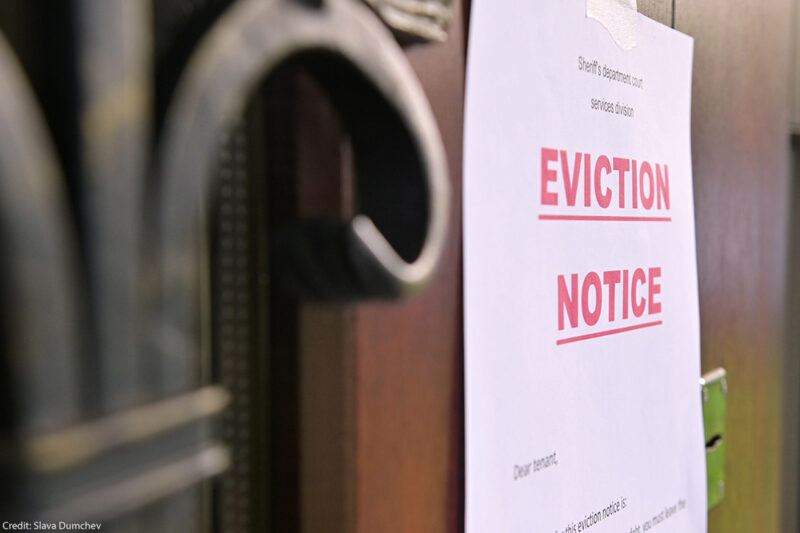
Just days after being assaulted in her home, L.B., a client at the ACLU Women’s Rights Project, was given 14 days to leave her home. Another client, N.S., was denied housing under a blanket “no-evictions” policy that disproportionately excludes Black women. When fair housing protections fail, women — especially low-income women, women of color, and survivors of gender-based violence — can lose access to safe, stable housing. Our clients are identified by their initials to protect their privacy.

Racial Justice
+2 Issues
How Eviction Brands Renters With a Scarlet Letter
Racial Justice
+2 Issues
How Eviction Brands Renters With a Scarlet Letter
The Fair Housing Act of 1968 (FHA) was meant to prevent exactly this. The law opened the door for people long shut out of housing opportunities, regardless of identity or background. To advance access to fair housing, the Department of Housing and Urban Development (HUD) and the ACLU have relied on disparate impact liability: a civil rights enforcement tool for challenging policies and practices that cause disproportionate, adverse effects on certain groups, regardless of discriminatory intent.
Just last month, however, the Trump administration moved to end this crucial protection. HUD Secretary Scott Turner announced a plan “to end the agency’s use of disparate-impact theory in fair housing and related civil rights enforcement” and to send these critical protections to “the ash heap of history.” Now, we risk losing an essential tool to push back against the same policies that jeopardized housing for L.B., N.S., and other victims of gender-based discrimination.
Housing Rule Against Discrimination Protects Women
Safe and stable housing is central to nearly every aspect of a person’s life. Where you live often impacts where you work, where your children go to school, your access to grocery stores, childcare, and other major resources, and even the safety and well-being of yourself and your family. Our clients at the ACLU Women’s Rights Project know firsthand how essential these protections are to their ability to survive and thrive.
When L.B. was served with eviction papers after being assaulted, the ACLU and the ACLU of Pennsylvania brought a federal fair housing action. We challenged the local nuisance ordinance that pressured landlords to evict tenants for calling the police, even when they experienced domestic violence. Soon after, HUD filed a fair housing complaint because of this policy’s disparate impact on women survivors, and as a result, L.B. won a settlement and the unjust ordinance was repealed.
For N.S., who was denied housing because of a five-year-old eviction case that was ultimately dismissed, the ACLU and our partners also successfully settled a fair housing action. Although blanket “no-evictions” policies impose unjust barriers for all tenants, these bans disproportionately exclude Black renters, and particularly Black women, from accessing housing. Since then, the ACLU and its partners have fought to eliminate these housing barriers for Black women and other women of color across the country, including by filing a civil rights complaint with HUD.

Advocates Challenge Discriminatory Eviction Screening Policies Enforced by Two Cook County Landlords - ACLU of Illinois
Advocates Challenge Discriminatory Eviction Screening Policies Enforced by Two Cook County Landlords - ACLU of Illinois
These fair housing protections have been especially essential to women and the broader movement for gender justice and equality. Women have historically faced significant barriers to obtaining safe and affordable housing. Discriminatory housing policies restrict women’s ability to access rental housing or to obtain a mortgage. It can jeopardize housing stability for survivors of gender-based violence who are disproportionately women. These barriers are even greater for Black women and other women of color, low-income women with children, women with disabilities, LGBTQ+ women, and other women who face multiple and intersecting forms of discrimination. Critically, gender-based discrimination in housing remains a pervasive issue across the country — impairing the ability of women to achieve economic justice and full equality in society.
Trump is Gutting Housing Protection Agency
The existing disparate impact rule, which codifies existing disparate impact standards under the Fair Housing Act, has been long recognized by HUD and numerous courts, including the Supreme Court, as essential to fulfilling the Fair Housing Act’s purpose. In 2013, HUD formalized disparate impact liability to address policies that appear “neutral” but disproportionately deny housing to women and other marginalized groups. The Supreme Court then affirmed HUD’s position in 2015. And in the decade since, numerous courts have applied the disparate impact rule in a variety of housing discrimination cases.
But under the Trump administration, HUD is stepping back from its role of fair housing enforcement. Beyond rescinding the disparate impact rule, the agency abruptly dismissed major investigations into systemic housing discrimination and segregation. HUD terminated hundreds of employees, including in its Office of Fair Housing and Equal Opportunity, and then cited staffing reductions to halt fair housing investigations. Moreover, essential guidance on disparate impact discrimination, such as criminal record screening, source-of-income discrimination, and digital housing and credit advertising, has been rescinded.
For survivors of gender-based violence, the vast majority of whom are women, whistleblowers reported that 75% of the staff working to enforce housing protections under the Violence Against Women Act were also gutted. Because of unlawful funding restrictions and other actions, survivors could also lose access to lifesaving resources like emergency housing, legal support, and medical care. Trump is even rolling back protections against lending discrimination under the Equal Credit Opportunity Act, originally passed so women could obtain credit in their own names.
Together, these attacks harm the ability of women, especially women of color and other marginalized identities, to achieve economic stability and be full and equal participants in society. Without the disparate impact rule, we lose an essential tool in advancing the broader movement for gender justice and equality. HUD must withdraw its proposed rule and commit to fulfilling its role by preserving women’s access to safe and stable housing.
Related Issues
Related Content
-
Press ReleaseAug 2026

Women's Rights
Foia Request Seeks Records Related To Pentagon Review Of Women In Ground Combat Roles. Explore Press Release.FOIA Request Seeks Records Related to Pentagon Review of Women in Ground Combat Roles
NEW YORK – Today, the American Civil Liberties Union’s Women’s Rights Project (WRP), the National Women’s Law Center (NWLC), and the Service Women’s Action Network (SWAN) filed a request under the Freedom of Information Act (FOIA) seeking records from the Department of Defense (DoD) regarding its decision to undertake formal review of the “effectiveness” of women in ground combat roles. The request comes as DoD and Secretary Pete Hegseth have provided no meaningful explanation for why the review was ordered, what it will examine, or what its findings could mean for women’s continued ability to serve in ground combat roles. In December 2025, DoD launched a six-month review of women’s integration into ground combat units, a decade after lifting the remaining restrictions for women to compete for those roles, in which roughly 5,000 women have served. DoD directed the Army and Marine Corps to provide data on the “operational effectiveness” of those units, including internal studies about women’s integration, to the Institute for Defense Analyses (IDA), a nonprofit organization. DoD did not announce the formal review, which became public only after it was reported by a news outlet. In April 2026, DoD reassigned the review to Johns Hopkins University Applied Physics Laboratory (JHU/APL) and extended the study’s duration to one year. “During his tenure, Secretary Hegseth has repeatedly questioned women’s ability to serve in ground combat, including by misleadingly claiming that occupational standards have been lowered to accommodate women. Such standards have been gender-neutral, by statute, for over 30 years,” said Gillian Thomas, senior counsel, ACLU’s Women’s Rights Project. “This formal review raises serious concerns that the Department of Defense is laying the groundwork to once again restrict qualified women from serving in combat. The public has a right to know why DoD ordered the review, its intended scope, and whether women’s exclusion from combat jobs is on the table as a potential outcome.” “Excluding qualified women from ground combat would make our military weaker, not stronger,” said Elisa Cardnell, chief executive officer, SWAN. “Women have always served with distinction on the front lines. Since formally being integrated into combat jobs, they have excelled in some of the military’s most demanding roles, brought critical operational experience and capabilities to missions around the world, and strengthened recruitment and retention. Every qualified servicemember should have the opportunity to earn their place and serve.” “Investigating women’s effectiveness in the military is baseless, sexist, and offensive,” said Lauren Khouri, senior director of workplace justice at NWLC. “Hegseth has been explicit about his intentions to push women out of the military and today we’re filing to find out the extent and intention of this review. This is an attack on our servicemembers and the public deserves transparency.” Women have always been on the frontlines of our nation’s defense and have served in every major U.S. conflict. For decades, however, restrictions barred women from thousands of combat positions. Those restrictions were gradually dismantled as women proved themselves in increasingly demanding assignments, including during the wars in Iraq and Afghanistan, where women were killed, wounded, and decorated for valor. In 2016, all remaining ground combat roles were open to women following a lawsuit by WRP on behalf of SWAN and four servicewomen challenging the Pentagon’s policy barring women from serving in those positions. Today, this progress is at risk following a series of actions by Secretary Hegseth that have raised concerns about women’s ability to serve in the military on equal terms. In addition to questioning women’s ability to serve in ground combat positions, Secretary Hegseth has repeatedly denigrated women servicemembers and veterans and taken unprecedented action to fire women leaders – along with Black officers – and purge them from promotion lists. He has also initiated changes to physical eligibility criteria for combat jobs across the military branches, based on an asserted belief that women have been held to lower fitness standards. These actions raise concerns that the formal review serves as a prelude to restrict women’s continued service in ground combat roles. Earlier this year the top enlisted leaders of each of the military branches testified before the Senate Armed Services Committee that women’s integration into combat occupations has not compromised performance standards or operational readiness. Even under questioning from congressional leaders, Secretary Hegseth has not offered any evidence calling women’s combat “effectiveness” into question, let alone supporting the need for further study. The FOIA request seeks records related to the formal review assigned to the Institute for Defense Analyses and later reassigned to the Johns Hopkins University Applied Physics Laboratory, including records describing the scope, purpose, methodology, and anticipated use of the review. It also seeks records related to an earlier DoD review of combat jobs’ occupational standards. A copy of the FOIA request is available here. -
News & CommentaryAug 2026

Women's Rights
Veterans Share Why The Military Is Stronger When Women Can Serve In Ground Combat Roles. Explore News & Commentary.Veterans Share Why the Military Is Stronger When Women Can Serve in Ground Combat Roles
Veterans reflect on their military service, the requirements of ground combat occupations, and the decade-long integration of women into those roles. -
News & CommentaryAug 2026

Criminal Law Reform
+2 Issues
States Are Punishing Women Who Survive Violence With Incarceration. They Deserve Clemency.. Explore News & Commentary.States are Punishing Women Who Survive Violence with Incarceration. They Deserve Clemency.
One woman violently forced into assisting a murder seeks clemency in Michigan. Author and journalist Justine van der Leun calls for states to enact laws protecting criminalized survivors. -
News & CommentaryJul 2026

Racial Justice
+3 Issues
Federal Funding Should Support Communities, Not Political Agendas. Explore News & Commentary.Federal Funding Should Support Communities, Not Political Agendas
Congressional investments should reach the communities they were intended to serve.