Racial Justice
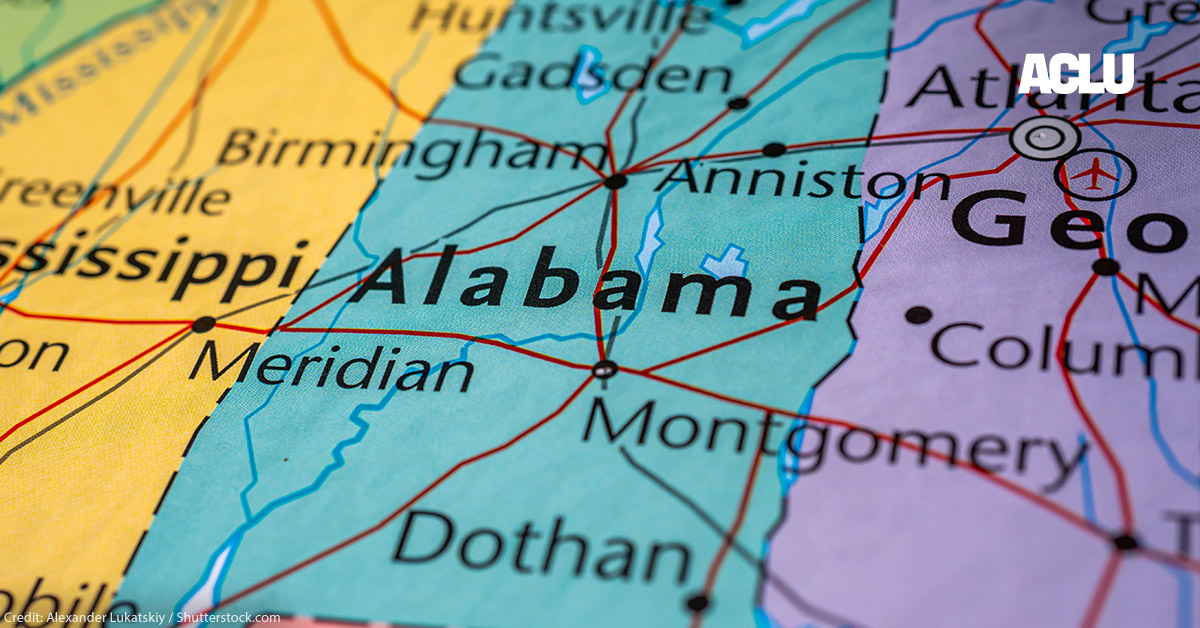
Allen v. Milligan
Whether Alabama’s congressional districts violate Section 2 of the Voting Rights Act because they discriminate against Black voters. We succeeded in winning a new map for 2024 elections which, for the first time, has two congressional district that provide Black voters a fair opportunity to elect candidates of their choosing despite multiple attempts by Alabama to stop us at the Supreme Court. Despite this win, Alabama is still defending its discriminatory map, and a trial was held in February 2025 to determine the map for the rest of the decade.
In May 2025, a federal court ruled that Alabama's 2023 congressional map both violates Section 2 of the Voting Rights Act and was enacted by the Alabama Legislature with racially discriminatory intent.
Status: Ongoing
View Case
Learn About Racial Justice
Featured
Arizona
Oct 2023

Racial Justice
Criminal Law Reform
Fund for Empowerment v. Phoenix, City of
Fund for Empowerment is a challenge to the City of Phoenix’s practice of conducting sweeps of encampments without notice, issuing citations to unsheltered people for camping and sleeping on public property when they have no place else to go, and confiscating and destroying their property without notice or process.
U.S. Supreme Court
Sep 2023
Racial Justice
Women's Rights
United States v. Rahimi
Whether 18 U.S.C. § 922(g)(8), which prohibits the possession of firearms by persons subject to domestic-violence restraining orders, violates the Second Amendment on its face.
U.S. Supreme Court
Sep 2023
Racial Justice
Muldrow v. City of St. Louis
Do employees claiming that they have been denied a transfer because of their race have to demonstrate in addition that the transfer caused a significant material disadvantage?
Court Case
Jun 2020
Racial Justice
Defy Ventures, Inc. v. Small Business Administration
Suing the Trump administration to lift its unlawful exclusion of businesses owned by people with criminal records from being eligible for Paycheck Protection Act funds
California
Mar 2019
Racial Justice
MediaJustice, et al. v. Federal Bureau of Investigation, et al.
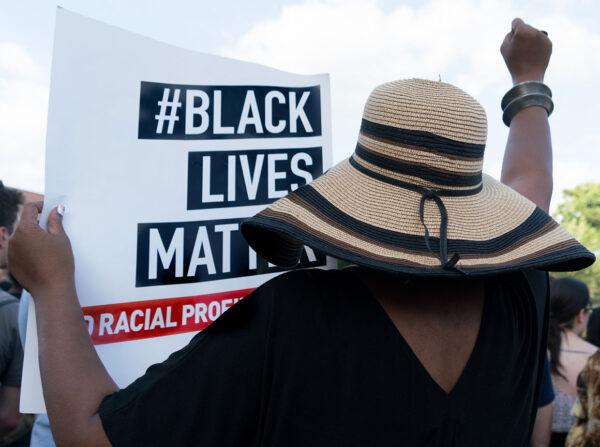
On March 21, 2019, the American Civil Liberties Union and MediaJustice, formerly known as "Center for Media Justice," filed a Freedom of Information Act lawsuit seeking records about FBI targeting of Black activists. The lawsuit enforces the ACLU and MediaJustice’s right to information about a 2017 FBI Intelligence Assessment that asserts, without evidence, that a group of so-called “Black Identity Extremists” poses a threat of domestic terrorism. The Intelligence Assessment was widely disseminated to law enforcement agencies nationwide, raising public concern about government surveillance of Black people and Black-led organizations based on anti-Black stereotypes and First Amendment protected activities.
Court Case
Aug 2015

Racial Justice
Disability Rights
S.R. v. Kenton County Sheriff's Office
A deputy sheriff shackled two elementary school children who have disabilities, causing them pain and trauma, according to a federal lawsuit filed today by the American Civil Liberties Union, the Children's Law Center, and Dinsmore & Shohl.
All Cases
129 Racial Justice Cases

Alaska
Sep 2025
Racial Justice
Voting Rights
Smith v. State of Alaska (Amicus)
The ACLU and ACLU of Alaska have filed an amicus in support of Tupe Smith, a woman born in American Samoa who now lives in Whittier, Alaska charged with falsely affirming that she was a U.S. citizen when she registered to vote. But Tupe Smith is not an “alien” under the law. People, like her, born in the U.S. territory of American Samoa are the only remaining individuals recognized as “non-citizen U.S. nationals,” a unique status that falls short of “citizen” but nonetheless recognizes that American Samoa has been part of the United States for over 125 years.
All evidence indicates that Ms. Smith believed that, as a non-citizen U.S. national, she was eligible to vote in local elections when she registered to vote. In fact, local election officials encouraged her to check the box labeled "U.S. citizen" when she registered, given the fact that there was no option for "U.S. national."
Our amicus brief urges Alaska’s Court of Appeals to dismiss Tupe Smith’s indictment because of well-settled principles that election-crime statutes should be construed to avoid punishing innocent mistakes. Separately, we warn that upholding a different view of the law would make Alaska an outlier among the states.
Explore case
Alaska
Sep 2025
Racial Justice
Voting Rights
Smith v. State of Alaska (Amicus)
The ACLU and ACLU of Alaska have filed an amicus in support of Tupe Smith, a woman born in American Samoa who now lives in Whittier, Alaska charged with falsely affirming that she was a U.S. citizen when she registered to vote. But Tupe Smith is not an “alien” under the law. People, like her, born in the U.S. territory of American Samoa are the only remaining individuals recognized as “non-citizen U.S. nationals,” a unique status that falls short of “citizen” but nonetheless recognizes that American Samoa has been part of the United States for over 125 years.
All evidence indicates that Ms. Smith believed that, as a non-citizen U.S. national, she was eligible to vote in local elections when she registered to vote. In fact, local election officials encouraged her to check the box labeled "U.S. citizen" when she registered, given the fact that there was no option for "U.S. national."
Our amicus brief urges Alaska’s Court of Appeals to dismiss Tupe Smith’s indictment because of well-settled principles that election-crime statutes should be construed to avoid punishing innocent mistakes. Separately, we warn that upholding a different view of the law would make Alaska an outlier among the states.

Court Case
Sep 2025
Racial Justice
Free Speech
Black Emergency Response Team v. Drummond
This lawsuit challenges an Oklahoma classroom censorship law, HB 1775, that severely restricts public school teachers and students from teaching and learning about race and gender.
Explore case
Court Case
Sep 2025
Racial Justice
Free Speech
Black Emergency Response Team v. Drummond
This lawsuit challenges an Oklahoma classroom censorship law, HB 1775, that severely restricts public school teachers and students from teaching and learning about race and gender.
New Hampshire
Aug 2025
Racial Justice
+2 Issues
National Education Association - New Hampshire v. Formella
Explore case
New Hampshire
Aug 2025
Racial Justice
+2 Issues
National Education Association - New Hampshire v. Formella
California
Jun 2025
Racial Justice
Criminal Law Reform
Coalition on Homelessness v. City and County of San Francisco
Coalition on Homelessness is a challenge to the City and County of San Francisco’s efforts to criminalize homelessness through an array of unconstitutional practices, including confiscating and destroying the personal property of unhoused people without adequate notice or due process, and citing and arresting unhoused people for sleeping in public.
Explore case
California
Jun 2025
Racial Justice
Criminal Law Reform
Coalition on Homelessness v. City and County of San Francisco
Coalition on Homelessness is a challenge to the City and County of San Francisco’s efforts to criminalize homelessness through an array of unconstitutional practices, including confiscating and destroying the personal property of unhoused people without adequate notice or due process, and citing and arresting unhoused people for sleeping in public.
New Hampshire
Mar 2025
Racial Justice
National Education Association et al. v. US Department of Education et al
The National Education Association, the National Education Association-New Hampshire, and the Center for Black Educator Development filed a challenge in federal court against the U.S. Department of Education’s Feb. 14, 2025 “Dear Colleague Letter,” which announced that ED will treat diversity, equity and inclusion (DEI) efforts as unlawful and threatens to move swiftly to cut schools’ federal funding. ED’s actions violate due process and the First Amendment, as well as basic requirements for agency action.
Explore case
New Hampshire
Mar 2025
Racial Justice
National Education Association et al. v. US Department of Education et al
The National Education Association, the National Education Association-New Hampshire, and the Center for Black Educator Development filed a challenge in federal court against the U.S. Department of Education’s Feb. 14, 2025 “Dear Colleague Letter,” which announced that ED will treat diversity, equity and inclusion (DEI) efforts as unlawful and threatens to move swiftly to cut schools’ federal funding. ED’s actions violate due process and the First Amendment, as well as basic requirements for agency action.