Civil Liberties

CAIR-Foundation, Inc and CAIR Florida, Inc. v. DeSantis et al.
The ACLU, the ACLU of Florida, the Southern Poverty Law Center, and their partners represent CAIR and CAIR-Florida in two federal lawsuits challenging Governor DeSantis’s unconstitutional and baseless designation of the nonprofits as “terrorist.” The lawsuits allege violations of CAIR and CAIR-Florida’s rights under the First Amendment and the due process clause of the Fourteenth Amendment.
Status: Ongoing
View Case
Learn About Civil Liberties
Featured
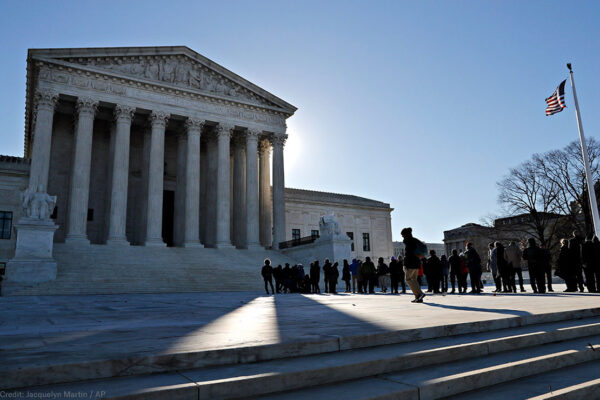
U.S. Supreme Court
May 2020
Civil Liberties
Trump v. Mazars/Trump v. Deutsche Bank AG
Whether President Trump should comply with congressional subpoenas and hand over his personal finance documents.
U.S. Supreme Court
May 2020
Civil Liberties
Trump v. Vance
Whether President Trump should comply with a grandy jury subpoena and hand over his personal finance documents.
All Cases
34 Civil Liberties Cases
California
Oct 2026
Civil Liberties
+2 Issues
Salles, et al. v. National Institutes of Health, et al.
Salles, et al. v. National Institutes of Health, et al. is a class action lawsuit challenging the censorship and termination of federally funded research by the National Institutes of Health (NIH). While ongoing litigation in APHA v. NIH successfully resulted in the reinstatement of hundreds of grants, NIH’s current policies continue to target viewpoints it opposes, threatening research because the government dislikes what it thinks the researchers believe or are likely to say, and continue to violate governing statutes and regulations. This is stymieing critical public health research, particularly related to climate change, the starkest health disparities including those faced by communities of color and LGBTQ+ populations, and other areas.
Explore case
California
Oct 2026
Civil Liberties
+2 Issues
Salles, et al. v. National Institutes of Health, et al.
Salles, et al. v. National Institutes of Health, et al. is a class action lawsuit challenging the censorship and termination of federally funded research by the National Institutes of Health (NIH). While ongoing litigation in APHA v. NIH successfully resulted in the reinstatement of hundreds of grants, NIH’s current policies continue to target viewpoints it opposes, threatening research because the government dislikes what it thinks the researchers believe or are likely to say, and continue to violate governing statutes and regulations. This is stymieing critical public health research, particularly related to climate change, the starkest health disparities including those faced by communities of color and LGBTQ+ populations, and other areas.
Minnesota Supreme Court
Oct 2026
Civil Liberties
Housing First Minn. v. City of Corcoran and Housing First Minn. v. City of Dayton
When a court rules that an issue is a “political question,” that issue becomes “nonjusticiable.” In other words, courts close their doors to political questions, even when an injured plaintiff seeks relief that a court could provide. The ACLU’s State Supreme Court Initiative and the ACLU of Minnesota filed an amicus brief in the Minnesota Supreme Court arguing that the Court should narrow, or at a minimum, not expand, the political question doctrine under the Minnesota Constitution. The brief urges the Court to preserve the justiciability of legal issues and thus ensure that provisions of the state Constitution are not just words on paper but meaningful guarantees for the people of Minnesota.
Explore case
Minnesota Supreme Court
Oct 2026
Civil Liberties
Housing First Minn. v. City of Corcoran and Housing First Minn. v. City of Dayton
When a court rules that an issue is a “political question,” that issue becomes “nonjusticiable.” In other words, courts close their doors to political questions, even when an injured plaintiff seeks relief that a court could provide. The ACLU’s State Supreme Court Initiative and the ACLU of Minnesota filed an amicus brief in the Minnesota Supreme Court arguing that the Court should narrow, or at a minimum, not expand, the political question doctrine under the Minnesota Constitution. The brief urges the Court to preserve the justiciability of legal issues and thus ensure that provisions of the state Constitution are not just words on paper but meaningful guarantees for the people of Minnesota.
Georgia Supreme Court
Sep 2026
Civil Liberties
In the Interest of J.K. et al., Children
The ACLU’s Center for Liberty and Women’s Rights Project, alongside the ACLU of Georgia, filed an amicus brief in the Georgia Supreme Court supporting a mother after a juvenile court terminated her parental rights even though at the same time the juvenile court expressly found that her continued relationship with her children would not harm them. Under Georgia’s termination statute, courts may terminate parental rights if they find that a child cannot safely return home at present, without any finding that, or even considering whether, a continued parent-child relationship would harm the child or that termination is necessary. In this case, the Department’s own caseworker testified that the mother’s weekly visits with her children went well and that the relationship benefited the children and would continue to. The children’s advocate agreed, testifying that the children had a good relationship and were bonded to their mother. Our brief urges the Court to require an individualized finding that severance is necessary to protect the child and that less drastic alternatives would not suffice. We argue that the Constitution does not permit the State to permanently end a parent-child relationship without first establishing that doing so is genuinely necessary.
Explore case
Georgia Supreme Court
Sep 2026
Civil Liberties
In the Interest of J.K. et al., Children
The ACLU’s Center for Liberty and Women’s Rights Project, alongside the ACLU of Georgia, filed an amicus brief in the Georgia Supreme Court supporting a mother after a juvenile court terminated her parental rights even though at the same time the juvenile court expressly found that her continued relationship with her children would not harm them. Under Georgia’s termination statute, courts may terminate parental rights if they find that a child cannot safely return home at present, without any finding that, or even considering whether, a continued parent-child relationship would harm the child or that termination is necessary. In this case, the Department’s own caseworker testified that the mother’s weekly visits with her children went well and that the relationship benefited the children and would continue to. The children’s advocate agreed, testifying that the children had a good relationship and were bonded to their mother. Our brief urges the Court to require an individualized finding that severance is necessary to protect the child and that less drastic alternatives would not suffice. We argue that the Constitution does not permit the State to permanently end a parent-child relationship without first establishing that doing so is genuinely necessary.
Georgia Supreme Court
Sep 2026
Civil Liberties
In the Interest of D.B.
The ACLU’s Center for Liberty and State Supreme Court Initiative, alongside the ACLU of Georgia, filed an amicus brief in the Georgia Supreme Court supporting a grieving mother challenging the removal of her children without notice, a hearing, or any finding that the children faced danger because one of her children had just died by suicide. A Georgia appellate court found that the State can take children from a parent ex parte—before the parent is ever heard—whenever circumstances are “exceptional,” which the court below defined to mean merely “unusual” rather than a genuine emergency. The juvenile court later returned the children, finding no basis for their removal and reprimanded the State for further traumatizing a grieving family. Because these removals are brief and the appeals process is slow, the practice largely evades review, and it falls hardest on the families with the least resources to challenge these kinds of removals. Our brief urges the court to require a genuine emergency before the State may remove a child without first hearing from their parent.
Explore case
Georgia Supreme Court
Sep 2026
Civil Liberties
In the Interest of D.B.
The ACLU’s Center for Liberty and State Supreme Court Initiative, alongside the ACLU of Georgia, filed an amicus brief in the Georgia Supreme Court supporting a grieving mother challenging the removal of her children without notice, a hearing, or any finding that the children faced danger because one of her children had just died by suicide. A Georgia appellate court found that the State can take children from a parent ex parte—before the parent is ever heard—whenever circumstances are “exceptional,” which the court below defined to mean merely “unusual” rather than a genuine emergency. The juvenile court later returned the children, finding no basis for their removal and reprimanded the State for further traumatizing a grieving family. Because these removals are brief and the appeals process is slow, the practice largely evades review, and it falls hardest on the families with the least resources to challenge these kinds of removals. Our brief urges the court to require a genuine emergency before the State may remove a child without first hearing from their parent.

Washington, D.C.
Aug 2026
Civil Liberties
Voting Rights
United States v. Evans
Representing Common Cause and two D.C. voters, the ACLU Voting Rights Project has intervened in a federal lawsuit over the federal government’s demand that D.C. turn over its entire voter registration roll, including voters’ sensitive personal data such as drivers’ license numbers and partial social security numbers.
Explore case
Washington, D.C.
Aug 2026
Civil Liberties
Voting Rights
United States v. Evans
Representing Common Cause and two D.C. voters, the ACLU Voting Rights Project has intervened in a federal lawsuit over the federal government’s demand that D.C. turn over its entire voter registration roll, including voters’ sensitive personal data such as drivers’ license numbers and partial social security numbers.