Civil Liberties

CAIR-Foundation, Inc and CAIR Florida, Inc. v. DeSantis et al.
The ACLU, the ACLU of Florida, the Southern Poverty Law Center, and their partners represent CAIR and CAIR-Florida in two federal lawsuits challenging Governor DeSantis’s unconstitutional and baseless designation of the nonprofits as “terrorist.” The lawsuits allege violations of CAIR and CAIR-Florida’s rights under the First Amendment and the due process clause of the Fourteenth Amendment.
Status: Ongoing
View Case
Learn About Civil Liberties
Featured
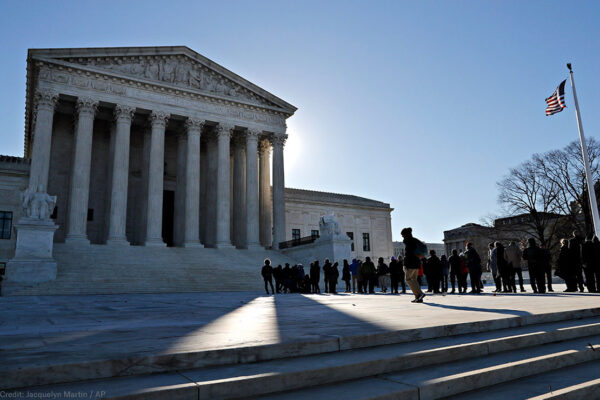
U.S. Supreme Court
May 2020
Civil Liberties
Trump v. Mazars/Trump v. Deutsche Bank AG
Whether President Trump should comply with congressional subpoenas and hand over his personal finance documents.
U.S. Supreme Court
May 2020
Civil Liberties
Trump v. Vance
Whether President Trump should comply with a grandy jury subpoena and hand over his personal finance documents.
All Cases
34 Civil Liberties Cases
Texas Supreme Court
Jul 2026
Civil Liberties
Moten v. State
A Texas statute requires “the state” to turn over certain information to criminal defendants as part of discovery. In 2024, in a case called State v. Heath, the Texas Court of Criminal Appeals interpreted the term “state” broadly to mean the entire state of Texas, including prosectors and law enforcement. Now, just two years after Heath, the State Prosecuting Attorney is asking the Court to revisit its decision and adopt a narrower interpretation of “the state”—one that would limit prosecutors’ statutory disclosure obligations. The outcome of this case, which centers on whether a recorded jail call should have been disclosed, has significant implications for the rights of criminal defendants throughout Texas to discover evidence relevant to their cases.
Explore case
Texas Supreme Court
Jul 2026
Civil Liberties
Moten v. State
A Texas statute requires “the state” to turn over certain information to criminal defendants as part of discovery. In 2024, in a case called State v. Heath, the Texas Court of Criminal Appeals interpreted the term “state” broadly to mean the entire state of Texas, including prosectors and law enforcement. Now, just two years after Heath, the State Prosecuting Attorney is asking the Court to revisit its decision and adopt a narrower interpretation of “the state”—one that would limit prosecutors’ statutory disclosure obligations. The outcome of this case, which centers on whether a recorded jail call should have been disclosed, has significant implications for the rights of criminal defendants throughout Texas to discover evidence relevant to their cases.
Michigan Supreme Court
Jul 2026
Civil Liberties
People v. Jennings
This case asks whether Michigan should adopt an approach to state constitutional interpretation that prioritizes Michigan sources and does not automatically require reference to parallel federal provisions or interpretations. The outcome of this case could have significant implications for the constitutional rights of Michiganders because an interpretation of the Michigan Constitution untethered from federal precedent provides an independent, and potentially more expansive, layer of security for individual rights.
Explore case
Michigan Supreme Court
Jul 2026
Civil Liberties
People v. Jennings
This case asks whether Michigan should adopt an approach to state constitutional interpretation that prioritizes Michigan sources and does not automatically require reference to parallel federal provisions or interpretations. The outcome of this case could have significant implications for the constitutional rights of Michiganders because an interpretation of the Michigan Constitution untethered from federal precedent provides an independent, and potentially more expansive, layer of security for individual rights.
Texas Supreme Court
May 2026
Civil Liberties
Privacy & Technology
Nguyen v. State
This case concerns the constitutionality of a highly intrusive law enforcement practice: the use of geofence warrants. Geofence warrants compel tech companies like Google to provide to law enforcement location data from every cell phone likely to have been within a certain area during a given time window. Then, law enforcement officers decide for themselves which users to focus on, and demand additional location information—and eventually identifying information—for the users they select. Geofence warrants raise grave constitutional concerns, including that (1) they authorize dragnet searches that sweep up the private data of many people without probable cause to believe that all or any of them were involved in any crime, and (2) they allow law enforcement officers to decide which users to focus on for additional data collection without judicial oversight. This case therefore has significant implications for Texans’ ability to secure their digital privacy and property against unjustified government intrusion.
Explore case
Texas Supreme Court
May 2026
Civil Liberties
Privacy & Technology
Nguyen v. State
This case concerns the constitutionality of a highly intrusive law enforcement practice: the use of geofence warrants. Geofence warrants compel tech companies like Google to provide to law enforcement location data from every cell phone likely to have been within a certain area during a given time window. Then, law enforcement officers decide for themselves which users to focus on, and demand additional location information—and eventually identifying information—for the users they select. Geofence warrants raise grave constitutional concerns, including that (1) they authorize dragnet searches that sweep up the private data of many people without probable cause to believe that all or any of them were involved in any crime, and (2) they allow law enforcement officers to decide which users to focus on for additional data collection without judicial oversight. This case therefore has significant implications for Texans’ ability to secure their digital privacy and property against unjustified government intrusion.
Court Case
Apr 2026
Civil Liberties
State v. Marquez and State v. Huerta
This consolidated case arises from two warrantless searches of closed containers belonging to criminal defendants. It raises two key questions: (1) whether the New Mexico Supreme Court should adopt an approach to interpreting the New Mexico Constitution that does not require reference to federal law, and (2) whether the New Mexico Constitution’s prohibition on unreasonable searches provides greater protections against inventory searches by police than does the federal Fourth Amendment standard. The ACLU’s State Supreme Court Initiative, joined by the ACLU of New Mexico, filed an amicus brief with the New Mexico Supreme Court.
Explore case
Court Case
Apr 2026
Civil Liberties
State v. Marquez and State v. Huerta
This consolidated case arises from two warrantless searches of closed containers belonging to criminal defendants. It raises two key questions: (1) whether the New Mexico Supreme Court should adopt an approach to interpreting the New Mexico Constitution that does not require reference to federal law, and (2) whether the New Mexico Constitution’s prohibition on unreasonable searches provides greater protections against inventory searches by police than does the federal Fourth Amendment standard. The ACLU’s State Supreme Court Initiative, joined by the ACLU of New Mexico, filed an amicus brief with the New Mexico Supreme Court.
New York
Mar 2026
Civil Liberties
Poe et al. v. Harris-Madden et al.
The ACLU, NYCLU, Family Justice Law Center, Brooklyn Defender Services, Center for Family Representation, NYU School of Law Family Defense Clinic, and Sullivan & Cromwell have filed a federal class action lawsuit on behalf of three New York parents challenging unconstitutional delays in the appeals process for reports on the Statewide Central Register of Child Abuse and Maltreatment (SCR). Parents who challenge their placement on the registry often wait months—sometimes more than a year—for a final decision. While they wait, they can be shut out of jobs in childcare, education, healthcare, and other fields involving children, and barred from adopting or fostering. Low-income parents, parents of color, and disabled parents are disproportionately policed by the family regulation system—also known as the child welfare system—and more likely to end up on the registry. This lawsuit seeks to ensure that parents have a way to clear their names in a timely manner.
Explore case
New York
Mar 2026
Civil Liberties
Poe et al. v. Harris-Madden et al.
The ACLU, NYCLU, Family Justice Law Center, Brooklyn Defender Services, Center for Family Representation, NYU School of Law Family Defense Clinic, and Sullivan & Cromwell have filed a federal class action lawsuit on behalf of three New York parents challenging unconstitutional delays in the appeals process for reports on the Statewide Central Register of Child Abuse and Maltreatment (SCR). Parents who challenge their placement on the registry often wait months—sometimes more than a year—for a final decision. While they wait, they can be shut out of jobs in childcare, education, healthcare, and other fields involving children, and barred from adopting or fostering. Low-income parents, parents of color, and disabled parents are disproportionately policed by the family regulation system—also known as the child welfare system—and more likely to end up on the registry. This lawsuit seeks to ensure that parents have a way to clear their names in a timely manner.