State Supreme Court
Featured
Tennessee Supreme Court
Apr 2026

Capital Punishment
Tony Von Carruthers v. State of Tennessee
Tennessee plans to execute Tony Carruthers on May 21 even though they refuse to run a simple fingerprint comparison and DNA testing that could prove what Tony has been arguing for 30 years - that he is innocent of this crime and that Tennessee convicted and sentenced the wrong man to death.
All Cases
84 State Supreme Court Cases
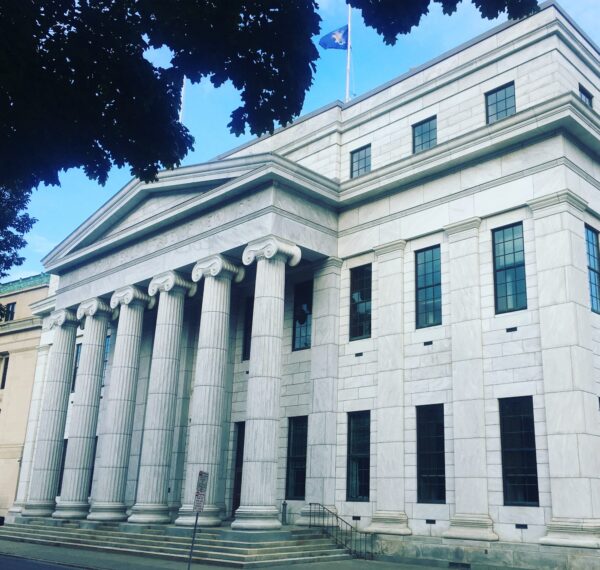
New York Supreme Court
Aug 2025
Voting Rights
Clarke v. Town of Newburgh (Amicus)
The ACLU, New York Civil Liberties Union, ACLU of Southern California, and ACLU of Northern California filed an amicus brief in the New York Court of Appeals arguing that the New York Voting Rights Act is constitutional legislation designed to combat and remedy modern forms of discrimination in voting affecting New York. At stake in this case is whether New York’s courts uphold the State legislature’s decision to protect the freedom to vote for all New Yorkers by ensuring voters are not subjected to discrimination when participating in the political process.
Explore case
New York Supreme Court
Aug 2025
Voting Rights
Clarke v. Town of Newburgh (Amicus)
The ACLU, New York Civil Liberties Union, ACLU of Southern California, and ACLU of Northern California filed an amicus brief in the New York Court of Appeals arguing that the New York Voting Rights Act is constitutional legislation designed to combat and remedy modern forms of discrimination in voting affecting New York. At stake in this case is whether New York’s courts uphold the State legislature’s decision to protect the freedom to vote for all New Yorkers by ensuring voters are not subjected to discrimination when participating in the political process.

Alabama Supreme Court
Aug 2025
Criminal Law Reform
Jennings v. Smith
This case asks whether Alabama law enforcement officers can demand physical ID when enforcing an Alabama that allows them to “Stop and Question” people they reasonably suspect of criminal activity. Although the U.S. Court of Appeals for the Eleventh Circuit has already held that Alabama’s stop-and-question law does not authorize officers to demand physical ID, a federal district court in Alabama certified a question to the Alabama Supreme Court effectively asking the Court to reject that interpretation. The ACLU’s State Supreme Court Initiative, along with the Cato Institute, the Southern Poverty Law Center, the Woods Foundation, and Kaplan Legal Services, filed an amicus brief urging the Alabama Supreme Court to agree with the Eleventh Circuit’s ruling. Our brief argues that the plain meaning of the stop-and-question law—given its title, its text, and the overall structure of the Alabama Code—rules out the possibility that it authorizes demands for physical documents. We also point out that interpreting the stop-and-question law to authorize document demands would render the law unconstitutional under both the U.S. and Alabama Constitutions.
Explore case
Alabama Supreme Court
Aug 2025
Criminal Law Reform
Jennings v. Smith
This case asks whether Alabama law enforcement officers can demand physical ID when enforcing an Alabama that allows them to “Stop and Question” people they reasonably suspect of criminal activity. Although the U.S. Court of Appeals for the Eleventh Circuit has already held that Alabama’s stop-and-question law does not authorize officers to demand physical ID, a federal district court in Alabama certified a question to the Alabama Supreme Court effectively asking the Court to reject that interpretation. The ACLU’s State Supreme Court Initiative, along with the Cato Institute, the Southern Poverty Law Center, the Woods Foundation, and Kaplan Legal Services, filed an amicus brief urging the Alabama Supreme Court to agree with the Eleventh Circuit’s ruling. Our brief argues that the plain meaning of the stop-and-question law—given its title, its text, and the overall structure of the Alabama Code—rules out the possibility that it authorizes demands for physical documents. We also point out that interpreting the stop-and-question law to authorize document demands would render the law unconstitutional under both the U.S. and Alabama Constitutions.
Nevada Supreme Court
Aug 2025
Capital Punishment
Ybarra v. Warden
This case presents the question of whether the execution of a capital defendant with serious mental illness violates Article I, section 6 of the Nevada Constitution, which prohibits cruel or unusual punishment. The ACLU’s Capital Punishment Project and State Supreme Court Initiative, along with the ACLU of Nevada, filed an amicus brief arguing that a plain reading of Article I, section 6 of the Nevada Constitution provides broader protections than the Eighth Amendment and should be interpreted to establish a categorical exemption from execution for this population.
Explore case
Nevada Supreme Court
Aug 2025
Capital Punishment
Ybarra v. Warden
This case presents the question of whether the execution of a capital defendant with serious mental illness violates Article I, section 6 of the Nevada Constitution, which prohibits cruel or unusual punishment. The ACLU’s Capital Punishment Project and State Supreme Court Initiative, along with the ACLU of Nevada, filed an amicus brief arguing that a plain reading of Article I, section 6 of the Nevada Constitution provides broader protections than the Eighth Amendment and should be interpreted to establish a categorical exemption from execution for this population.
Minnesota Supreme Court
Jul 2025
Free Speech
Energy Transfer LP v. Greenpeace International, Unicorn Riot
This case in the Minnesota Supreme Court asks whether the MFFIA's protections apply to newsgatherers even if they are alleged to have engaged in trespassing while newsgathering. The ACLU’s State Supreme Court Initiative, alongside the ACLU of Minnesota and law firm Biersdorf & Associations, filed a brief representing Unicorn Riot, a media organization that covered protests of the Dakota Access Pipeline. The brief argues that MFFIA and constitutional reporter’s privileges, under both the U.S. and Minnesota constitutions, protect Unicorn Riot from having to comply with Energy Transfer’s subpoenas.
Explore case
Minnesota Supreme Court
Jul 2025
Free Speech
Energy Transfer LP v. Greenpeace International, Unicorn Riot
This case in the Minnesota Supreme Court asks whether the MFFIA's protections apply to newsgatherers even if they are alleged to have engaged in trespassing while newsgathering. The ACLU’s State Supreme Court Initiative, alongside the ACLU of Minnesota and law firm Biersdorf & Associations, filed a brief representing Unicorn Riot, a media organization that covered protests of the Dakota Access Pipeline. The brief argues that MFFIA and constitutional reporter’s privileges, under both the U.S. and Minnesota constitutions, protect Unicorn Riot from having to comply with Energy Transfer’s subpoenas.
Wisconsin Supreme Court
Jul 2025
Civil Liberties
+2 Issues
State v. K.R.C.
This case asks whether a 12-year-old boy was in custody and entitled to Miranda warnings during a closed-door police interrogation by a school resource officer in the school building. The court of appeals held that he was not in custody, not entitled to Miranda warnings, and voluntarily incriminated himself. The ACLU’s State Supreme Court Initiative and the ACLU of Wisconsin filed an amicus brief arguing that admitting the boy’s statements into evidence not only violated the Fifth Amendment to the U.S. Constitution but Article I, Section 8 of the Wisconsin Constitution, and urging the Wisconsin Supreme Court to rest its decision on the state charter to better protect Wisconsinites’ civil liberties.
Explore case
Wisconsin Supreme Court
Jul 2025
Civil Liberties
+2 Issues
State v. K.R.C.
This case asks whether a 12-year-old boy was in custody and entitled to Miranda warnings during a closed-door police interrogation by a school resource officer in the school building. The court of appeals held that he was not in custody, not entitled to Miranda warnings, and voluntarily incriminated himself. The ACLU’s State Supreme Court Initiative and the ACLU of Wisconsin filed an amicus brief arguing that admitting the boy’s statements into evidence not only violated the Fifth Amendment to the U.S. Constitution but Article I, Section 8 of the Wisconsin Constitution, and urging the Wisconsin Supreme Court to rest its decision on the state charter to better protect Wisconsinites’ civil liberties.