State Supreme Court
Featured
Tennessee Supreme Court
Apr 2026

Capital Punishment
Tony Von Carruthers v. State of Tennessee
Tennessee plans to execute Tony Carruthers on May 21 even though they refuse to run a simple fingerprint comparison and DNA testing that could prove what Tony has been arguing for 30 years - that he is innocent of this crime and that Tennessee convicted and sentenced the wrong man to death.
All Cases
84 State Supreme Court Cases

Iowa Supreme Court
Jun 2025
Criminal Law Reform
State v. Hidlebaugh
This case asks whether it violates equal protection principles to impose a prison sentence, instead of probation, based on a defendant’s inability to purchase a house. The ACLU’s State Supreme Court Initiative and the ACLU of Iowa filed an amicus brief arguing that imposing a harsher sentence based on a criminal defendant’s inability to purchase a home impinges on the equal protection guarantees in the Fourteenth Amendment of the U.S. Constitution and article I, sections 1 and 6 of the Iowa Constitution.
Explore case
Iowa Supreme Court
Jun 2025
Criminal Law Reform
State v. Hidlebaugh
This case asks whether it violates equal protection principles to impose a prison sentence, instead of probation, based on a defendant’s inability to purchase a house. The ACLU’s State Supreme Court Initiative and the ACLU of Iowa filed an amicus brief arguing that imposing a harsher sentence based on a criminal defendant’s inability to purchase a home impinges on the equal protection guarantees in the Fourteenth Amendment of the U.S. Constitution and article I, sections 1 and 6 of the Iowa Constitution.
Michigan Supreme Court
Jun 2025
Criminal Law Reform
State v. Fenderson
This case asks whether the government can elicit inculpatory statements from a defendant by giving him misleading information about his rights and applying coercive pressure, then using the statements against him in a criminal case. The ACLU’s State Supreme Court Initiative and the ACLU of Michigan filed an amicus brief arguing that such actions by the government violate a defendant’s rights under the Fifth Amendment to the U.S. Constitution and, independently, Article 1, Section 17 of the Michigan Constitution, which affords even broader protections against self-incrimination than the Fifth Amendment.
Explore case
Michigan Supreme Court
Jun 2025
Criminal Law Reform
State v. Fenderson
This case asks whether the government can elicit inculpatory statements from a defendant by giving him misleading information about his rights and applying coercive pressure, then using the statements against him in a criminal case. The ACLU’s State Supreme Court Initiative and the ACLU of Michigan filed an amicus brief arguing that such actions by the government violate a defendant’s rights under the Fifth Amendment to the U.S. Constitution and, independently, Article 1, Section 17 of the Michigan Constitution, which affords even broader protections against self-incrimination than the Fifth Amendment.

Georgia Supreme Court
Jun 2025
Voting Rights
Eternal Vigilance Action, Inc. v. Georgia
The ACLU and partner organizations intervened in this case to represent the rights of voters and voting-rights organizations in a case challenging a number of rules passed by the Georgia State Election Board. We challenged the rule requiring that the number of votes cast be hand counted at the polling place prior to the tabulation of votes. In a critical victory for Georgia voters, in June 2025, the Georgia Supreme Court upheld a lower court’s decision permanently blocking the rule requiring hand counting of ballots at polling places before tabulation — a process widely criticized for risking delays, ballot spoliation, and voter disenfranchisement.
Explore case
Georgia Supreme Court
Jun 2025
Voting Rights
Eternal Vigilance Action, Inc. v. Georgia
The ACLU and partner organizations intervened in this case to represent the rights of voters and voting-rights organizations in a case challenging a number of rules passed by the Georgia State Election Board. We challenged the rule requiring that the number of votes cast be hand counted at the polling place prior to the tabulation of votes. In a critical victory for Georgia voters, in June 2025, the Georgia Supreme Court upheld a lower court’s decision permanently blocking the rule requiring hand counting of ballots at polling places before tabulation — a process widely criticized for risking delays, ballot spoliation, and voter disenfranchisement.
Hawaiʻi Supreme Court
Apr 2025
Criminal Law Reform
State of Hawaiʻi v. Zuffante
In 1994, the Supreme Court of Hawaiʻi held in State v. Kekona that the due process clause of the Hawai‘i Constitution does not require custodial interrogations to be recorded. More than 30 years later, with advances in technology that have made recording far easier, this case asks whether this decision should be reconsidered. The ACLU’s State Supreme Court Initiative, along with the ACLU of Hawai‘i filed an amicus brief arguing that the Supreme Court of Hawaiʻi should now hold that custodial interrogations must be recorded in order to be admissible in court, either as a matter of due process or as an exercise of the Court’s supervisory authority over lower courts.
Explore case
Hawaiʻi Supreme Court
Apr 2025
Criminal Law Reform
State of Hawaiʻi v. Zuffante
In 1994, the Supreme Court of Hawaiʻi held in State v. Kekona that the due process clause of the Hawai‘i Constitution does not require custodial interrogations to be recorded. More than 30 years later, with advances in technology that have made recording far easier, this case asks whether this decision should be reconsidered. The ACLU’s State Supreme Court Initiative, along with the ACLU of Hawai‘i filed an amicus brief arguing that the Supreme Court of Hawaiʻi should now hold that custodial interrogations must be recorded in order to be admissible in court, either as a matter of due process or as an exercise of the Court’s supervisory authority over lower courts.
Pennsylvania Supreme Court
Mar 2025
Voting Rights
Baxter v. Philadelphia Board of Elections
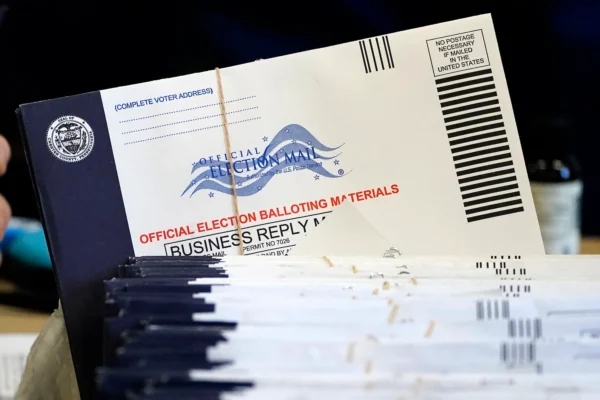
Eligible Philadelphia-area voters who submitted mail ballots in the September 17, 2024 special election only to have their votes set aside because they omitted or miswrote the correct date on their outer return envelope – even though the date is not used for any purpose – sued to have their votes count. Plaintiffs urge the courts to rule that enforcing the irrelevant envelope-dating requirement to disenfranchise eligible voters violates the Pennsylvania Constitution's Free and Equal Elections Clause.
Explore case
Pennsylvania Supreme Court
Mar 2025
Voting Rights
Baxter v. Philadelphia Board of Elections
Eligible Philadelphia-area voters who submitted mail ballots in the September 17, 2024 special election only to have their votes set aside because they omitted or miswrote the correct date on their outer return envelope – even though the date is not used for any purpose – sued to have their votes count. Plaintiffs urge the courts to rule that enforcing the irrelevant envelope-dating requirement to disenfranchise eligible voters violates the Pennsylvania Constitution's Free and Equal Elections Clause.