State Supreme Court
Featured
Tennessee Supreme Court
Apr 2026

Capital Punishment
Tony Von Carruthers v. State of Tennessee
Tennessee plans to execute Tony Carruthers on May 21 even though they refuse to run a simple fingerprint comparison and DNA testing that could prove what Tony has been arguing for 30 years - that he is innocent of this crime and that Tennessee convicted and sentenced the wrong man to death.
All Cases
84 State Supreme Court Cases

New York Supreme Court
Feb 2025
Smart Justice
Free Speech
NYCLU v. New York State Office of Court Administration
This case in the New York Court of Appeals (the highest New York state court) asks whether a government agency can conceal guidance that it issues to judges on how to apply the law in adjudicating cases. A few years ago, news reporting brought to light that a New York administrative agency has a practice of issuing such guidance to state court judges without disclosing it to the public. Because the agency's guidance informs how judges decide cases—with important implications for people’s rights—the New York Civil Liberties Union requested access to it under New York’s Freedom of Information Law. The agency denied the request, so the NYCLU sued. The NYCLU and the ACLU’s State Supreme Court Initiative are arguing that the public is entitled to the guidance and that there is a strong public interest in the transparent administration of justice.
Explore case
New York Supreme Court
Feb 2025
Smart Justice
Free Speech
NYCLU v. New York State Office of Court Administration
This case in the New York Court of Appeals (the highest New York state court) asks whether a government agency can conceal guidance that it issues to judges on how to apply the law in adjudicating cases. A few years ago, news reporting brought to light that a New York administrative agency has a practice of issuing such guidance to state court judges without disclosing it to the public. Because the agency's guidance informs how judges decide cases—with important implications for people’s rights—the New York Civil Liberties Union requested access to it under New York’s Freedom of Information Law. The agency denied the request, so the NYCLU sued. The NYCLU and the ACLU’s State Supreme Court Initiative are arguing that the public is entitled to the guidance and that there is a strong public interest in the transparent administration of justice.
Montana Supreme Court
Feb 2025
Free Speech
+2 Issues
City of Kalispell v. Doman
This case asks whether the state can arrest, charge, and convict someone under Montana’s obstruction statute for exercising their federal and state constitutional right to record police officers in public spaces. The defendant was filming a traffic stop when police instructed him to move farther away. When he did not move as far as they wanted, they arrested him for obstructing a peace officer. The ACLU’s State Supreme Court Initiative, along with the ACLU of Montana, filed an amicus brief in support of the defendant arguing that the officer’s refusal to allow the defendant to peacefully record police activity from a public sidewalk was, in effect, a content-based restriction on speech that could not be justified under strict scrutiny. Even if the restriction was not content-based, our brief argues that it is not a reasonable time place or manner restriction.
Explore case
Montana Supreme Court
Feb 2025
Free Speech
+2 Issues
City of Kalispell v. Doman
This case asks whether the state can arrest, charge, and convict someone under Montana’s obstruction statute for exercising their federal and state constitutional right to record police officers in public spaces. The defendant was filming a traffic stop when police instructed him to move farther away. When he did not move as far as they wanted, they arrested him for obstructing a peace officer. The ACLU’s State Supreme Court Initiative, along with the ACLU of Montana, filed an amicus brief in support of the defendant arguing that the officer’s refusal to allow the defendant to peacefully record police activity from a public sidewalk was, in effect, a content-based restriction on speech that could not be justified under strict scrutiny. Even if the restriction was not content-based, our brief argues that it is not a reasonable time place or manner restriction.
Colorado Supreme Court
Feb 2025
Voting Rights
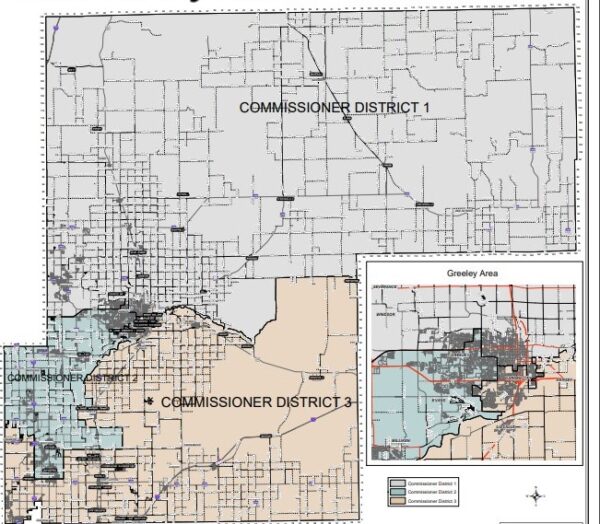
League of Women Voters of Greeley, Weld County v. Board of County Commissioners of Weld County (Amicus)
When drawing its new maps, the Weld County Board of County Commissioners violated Colorado law imposing specific requirements meant to guarantee that county commission districts are drawn transparently and fairly, such that voters are empowered to elect responsive and accountable commissioners. A Colorado district court granted summary judgment to voter plaintiffs who challenged the maps, but the Board appealed the decision, arguing in part that voters lacked standing and a right of action to challenge the unlawful districts.
Explore case
Colorado Supreme Court
Feb 2025
Voting Rights
League of Women Voters of Greeley, Weld County v. Board of County Commissioners of Weld County (Amicus)
When drawing its new maps, the Weld County Board of County Commissioners violated Colorado law imposing specific requirements meant to guarantee that county commission districts are drawn transparently and fairly, such that voters are empowered to elect responsive and accountable commissioners. A Colorado district court granted summary judgment to voter plaintiffs who challenged the maps, but the Board appealed the decision, arguing in part that voters lacked standing and a right of action to challenge the unlawful districts.
Oregon Supreme Court
Feb 2025
Prisoners' Rights
Huskey v. Oregon Department of Corrections
This case in the Oregon Supreme Court centers on whether Article I, Section 41(3) of the Oregon Constitution, which provides that Oregon prisoners lack legally enforceable rights to prison jobs and training, bars prisoners from collecting damages relating to lost prison jobs and training caused by the alleged breach of a settlement agreement by prison officials. The ACLU’s State Supreme Court Initiative, alongside the ACLU of Oregon, filed an amicus brief arguing that plaintiff Arnold Huskey, an incarcerated individual whose identity was used in Department of Corrections training materials, is entitled to damages notwithstanding Article I, Section 41(3), because plaintiffs in contract disputes never have to show standalone legal rights to the damages they claim. Instead, they need only show that the damages were reasonably foreseeable consequences of the alleged breach of contract.
Explore case
Oregon Supreme Court
Feb 2025
Prisoners' Rights
Huskey v. Oregon Department of Corrections
This case in the Oregon Supreme Court centers on whether Article I, Section 41(3) of the Oregon Constitution, which provides that Oregon prisoners lack legally enforceable rights to prison jobs and training, bars prisoners from collecting damages relating to lost prison jobs and training caused by the alleged breach of a settlement agreement by prison officials. The ACLU’s State Supreme Court Initiative, alongside the ACLU of Oregon, filed an amicus brief arguing that plaintiff Arnold Huskey, an incarcerated individual whose identity was used in Department of Corrections training materials, is entitled to damages notwithstanding Article I, Section 41(3), because plaintiffs in contract disputes never have to show standalone legal rights to the damages they claim. Instead, they need only show that the damages were reasonably foreseeable consequences of the alleged breach of contract.
Utah Supreme Court
Jan 2025
Capital Punishment
Menzies v. Utah Department of Corrections
Article I, section 9 of the Utah Constitution protects incarcerated individuals from both cruel and unusual punishment and unnecessarily rigorous treatment. This case asks whether death-sentenced plaintiffs seeking to challenge certain execution methods as cruel and unusual or unnecessarily rigorous under this provision must identify, in their pleadings, an alternative method of execution. The U.S. Supreme Court has required this alternative for Eighth Amendment challenges, but the ACLU’s State Supreme Court Initiative, alongside the Capital Punishment Project and ACLU of Utah, filed an amicus brief in support of the plaintiffs, arguing that federal caselaw does not limit the greater protections provided by section 9 of the Utah Constitution. Forcing prisoners challenging a method of execution to identify an acceptable alternative method is cruel, coercive, and not necessary to the administration of Utah’s death penalty laws.
Explore case
Utah Supreme Court
Jan 2025
Capital Punishment
Menzies v. Utah Department of Corrections
Article I, section 9 of the Utah Constitution protects incarcerated individuals from both cruel and unusual punishment and unnecessarily rigorous treatment. This case asks whether death-sentenced plaintiffs seeking to challenge certain execution methods as cruel and unusual or unnecessarily rigorous under this provision must identify, in their pleadings, an alternative method of execution. The U.S. Supreme Court has required this alternative for Eighth Amendment challenges, but the ACLU’s State Supreme Court Initiative, alongside the Capital Punishment Project and ACLU of Utah, filed an amicus brief in support of the plaintiffs, arguing that federal caselaw does not limit the greater protections provided by section 9 of the Utah Constitution. Forcing prisoners challenging a method of execution to identify an acceptable alternative method is cruel, coercive, and not necessary to the administration of Utah’s death penalty laws.