Civil Liberties
Featured
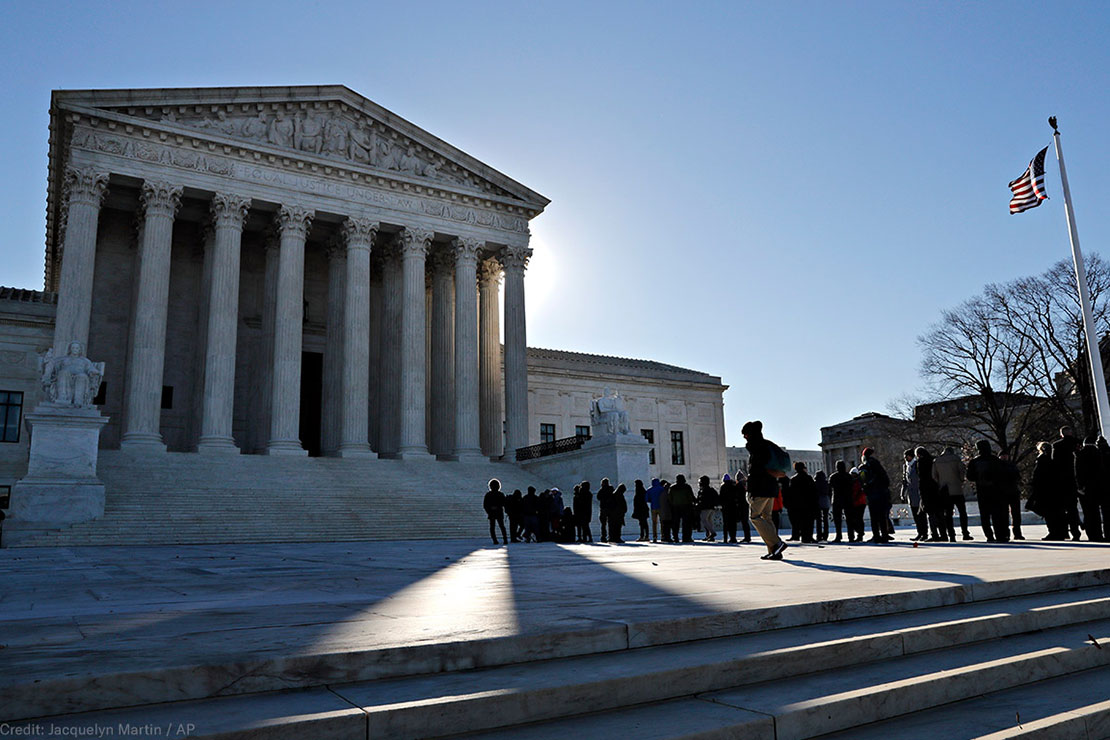
U.S. Supreme Court
May 2020
Civil Liberties
Trump v. Vance
Whether President Trump should comply with a grandy jury subpoena and hand over his personal finance documents.
All Cases
27 Civil Liberties Cases

Court Case
Apr 2026
Civil Liberties
State v. Marquez and State v. Huerta
This consolidated case arises from two warrantless searches of closed containers belonging to criminal defendants. It raises two key questions: (1) whether the New Mexico Supreme Court should adopt an approach to interpreting the New Mexico Constitution that does not require reference to federal law, and (2) whether the New Mexico Constitution’s prohibition on unreasonable searches provides greater protections against inventory searches by police than does the federal Fourth Amendment standard.
Explore case
Court Case
Apr 2026
Civil Liberties
State v. Marquez and State v. Huerta
This consolidated case arises from two warrantless searches of closed containers belonging to criminal defendants. It raises two key questions: (1) whether the New Mexico Supreme Court should adopt an approach to interpreting the New Mexico Constitution that does not require reference to federal law, and (2) whether the New Mexico Constitution’s prohibition on unreasonable searches provides greater protections against inventory searches by police than does the federal Fourth Amendment standard.
Michigan Supreme Court
Mar 2026
Civil Liberties
People v. Jennings
This case asks whether Michigan should adopt an approach to state constitutional interpretation that prioritizes Michigan sources and does not automatically require reference to parallel federal provisions or interpretations. The outcome of this case could have significant implications for the constitutional rights of Michiganders because an interpretation of the Michigan Constitution untethered from federal precedent provides an independent, and potentially more expansive, layer of security for individual rights.
Explore case
Michigan Supreme Court
Mar 2026
Civil Liberties
People v. Jennings
This case asks whether Michigan should adopt an approach to state constitutional interpretation that prioritizes Michigan sources and does not automatically require reference to parallel federal provisions or interpretations. The outcome of this case could have significant implications for the constitutional rights of Michiganders because an interpretation of the Michigan Constitution untethered from federal precedent provides an independent, and potentially more expansive, layer of security for individual rights.
New York
Mar 2026
Civil Liberties
Poe et al. v. Harris-Madden et al.
The ACLU, NYCLU, Family Justice Law Center, Brooklyn Defender Services, Center for Family Representation, NYU School of Law Family Defense Clinic, and Sullivan & Cromwell have filed a federal class action lawsuit on behalf of three New York parents challenging unconstitutional delays in the appeals process for reports on the Statewide Central Register of Child Abuse and Maltreatment (SCR). Parents who challenge their placement on the registry often wait months—sometimes more than a year—for a final decision. While they wait, they can be shut out of jobs in childcare, education, healthcare, and other fields involving children, and barred from adopting or fostering. Low-income parents, parents of color, and disabled parents are disproportionately policed by the family regulation system—also known as the child welfare system—and more likely to end up on the registry. This lawsuit seeks to ensure that parents have a way to clear their names in a timely manner.
Explore case
New York
Mar 2026
Civil Liberties
Poe et al. v. Harris-Madden et al.
The ACLU, NYCLU, Family Justice Law Center, Brooklyn Defender Services, Center for Family Representation, NYU School of Law Family Defense Clinic, and Sullivan & Cromwell have filed a federal class action lawsuit on behalf of three New York parents challenging unconstitutional delays in the appeals process for reports on the Statewide Central Register of Child Abuse and Maltreatment (SCR). Parents who challenge their placement on the registry often wait months—sometimes more than a year—for a final decision. While they wait, they can be shut out of jobs in childcare, education, healthcare, and other fields involving children, and barred from adopting or fostering. Low-income parents, parents of color, and disabled parents are disproportionately policed by the family regulation system—also known as the child welfare system—and more likely to end up on the registry. This lawsuit seeks to ensure that parents have a way to clear their names in a timely manner.
New Mexico Supreme Court
Feb 2026
Civil Liberties
Atencio v. State of New Mexico
This case asks whether the State of New Mexico’s actions enabling pollution from oil and gas extraction, and its failure to control that pollution, violate the New Mexico Constitution’s Pollution Control Clause, Inherent Rights Clause, Due Process Clause, and Equal Protection Clause. Our brief urges the New Mexico Supreme Court to answer those questions by retiring its “interstitial approach” to state constitutional interpretation—which looks first to federal doctrine when interpreting state constitutional provisions that arguably have U.S. Constitutional analogues—and instead interpreting the New Mexico Constitution holistically and independently. This independent approach, we explain, will ensure that New Mexicans can enjoy—and enforce—the rights guaranteed to them in their unique founding document.
Explore case
New Mexico Supreme Court
Feb 2026
Civil Liberties
Atencio v. State of New Mexico
This case asks whether the State of New Mexico’s actions enabling pollution from oil and gas extraction, and its failure to control that pollution, violate the New Mexico Constitution’s Pollution Control Clause, Inherent Rights Clause, Due Process Clause, and Equal Protection Clause. Our brief urges the New Mexico Supreme Court to answer those questions by retiring its “interstitial approach” to state constitutional interpretation—which looks first to federal doctrine when interpreting state constitutional provisions that arguably have U.S. Constitutional analogues—and instead interpreting the New Mexico Constitution holistically and independently. This independent approach, we explain, will ensure that New Mexicans can enjoy—and enforce—the rights guaranteed to them in their unique founding document.
Utah Supreme Court
Jan 2026
Civil Liberties
Fuja v. Stephens
This case asks whether government officials who intentionally violate the law are immune from damages suits under a state statute governing such suits, and if so, whether the statute itself violates the Open Courts Clause of the Utah Constitution.
Utah’s Open Courts Clause, like similar provisions in thirty-nine other states across the country, protects an individual’s right to seek judicial remedies for wrongs committed against them. It therefore serves as an important tool that does not exist in the U.S. Constitution to hold government actors accountable.
Explore case
Utah Supreme Court
Jan 2026
Civil Liberties
Fuja v. Stephens
This case asks whether government officials who intentionally violate the law are immune from damages suits under a state statute governing such suits, and if so, whether the statute itself violates the Open Courts Clause of the Utah Constitution.
Utah’s Open Courts Clause, like similar provisions in thirty-nine other states across the country, protects an individual’s right to seek judicial remedies for wrongs committed against them. It therefore serves as an important tool that does not exist in the U.S. Constitution to hold government actors accountable.